
Short answer? Vetted agency directories like Clutch and DesignRush, European nearshore teams with a documented history of keeping sites alive and healthy, or a custom web development company - like Flexi IT - that bakes long-term support straight into how it operates. The real challenge isn't finding developers. Thousands exist. The challenge is landing a team that sees your website as a product they co-own, not a ticket they close.
Here's what we'll walk through:
- Why ongoing maintenance is a business-critical investment in 2026
- The best channels for sourcing reliable custom web development services teams
- What to look for (and what to avoid) when evaluating a professional web design company
- How much maintenance and upgrades actually cost in Europe
- A practical checklist for vetting your next partner
Why Does Ongoing Maintenance Matter for Custom-Built Websites?
Think of a bespoke website the way you'd think of a house. You wouldn't build one, hand over the keys, and never touch the plumbing again. Websites rot too - just digitally. Security holes widen. Plugins fall out of date. Performance degrades so gradually you barely notice until Google does, and by then you're haemorrhaging rankings.
Fast Fact: According to 2026 industry data, the global website maintenance and support services market is valued at approximately €3 billion and is growing at 6.7% CAGR, expected to reach €4.8 billion by 2032. That's not a niche - it's a booming sector because businesses are learning the hard way that neglected sites lose traffic, revenue, and trust.
So what does "ongoing maintenance" actually mean in practice?
- Security patching: Plugging vulnerabilities before they become breaches
- Performance optimisation: Keeping Core Web Vitals healthy and load times under 3 seconds
- CMS and plugin updates: Ensuring compatibility and stability after each release
- Content updates: Fresh copy, new landing pages, seasonal campaigns
- Backup and disaster recovery: So a server hiccup doesn't erase months of work
- Feature upgrades: Adding new integrations, improving UX, scaling for growth
Now consider the price of ignoring all that. IT downtime alone hits small businesses for between €5,200 and €20,400 per hour in 2026. Not per day - per hour. A single bad weekend can obliterate a quarter's worth of marketing spend, and that's before you factor in the reputational damage nobody bothers to quantify until it's too late.
Where Can You Find Reliable Teams for Custom Web Development Services?
1. Verified Agency Directories
Starting cold? Directories are your fastest route to a shortlist. They do the initial vetting so you don't have to, gathering verified client reviews, project histories, and pricing data into one searchable interface. Not perfect - no directory is - but vastly better than a Google search and a prayer.
| Directory | Strengths | Best For |
|---|---|---|
| Clutch | 19,000+ listed agencies, verified reviews, detailed project data | Comparing agencies by budget, location, and service scope |
| DesignRush | Backed by major brands, portfolio-focused, filterable categories | Finding a professional web design company with strong visual portfolios |
| Digital Agency Network (DAN) | European focus, curated listings, team transparency criteria | Sourcing European-based providers specifically |
| GoodFirms | Research-driven rankings, detailed company profiles | Cross-referencing Clutch findings with a second opinion |
One useful detail: Clutch lets you filter by "website maintenance and support" as a distinct service category. Most European agencies listed there charge somewhere between €46 and €92 per hour, which immediately gives you a ballpark before anyone sends a proposal.
2. Nearshore European Agencies
If your business sits in the UK or Western Europe, Central and Eastern Europe deserve a serious look. The talent is genuinely strong. The cultural overlap is real - these aren't teams working in radically different business contexts. Time zones align well enough for same-day collaboration, and rates sit meaningfully below what you'd pay domestically without the quality trade-offs people used to worry about a decade ago.
Fast Fact: In 2026, 92% of the world's 2,000 largest companies use technology outsourcing, with software development and web maintenance among the most commonly outsourced functions. The global IT outsourcing market is estimated at €572 billion this year.
The numbers tell the story plainly enough:
| Region | Hourly Rate (€) | Key Hubs |
|---|---|---|
| Western Europe (UK, Germany, France) | €60 – €130 | London, Berlin, Paris, Amsterdam |
| Central & Eastern Europe | €40 – €75 | Warsaw, Kyiv, Bucharest, Prague |
| Southern Europe | €35 – €65 | Lisbon, Barcelona, Athens |
Poland leads with over 430,000 tech specialists and a well-oiled outsourcing machine that's been running for years. Ukraine - where we at Flexi IT operate - brings a comparable depth of talent, particularly in full-stack engineering, WordPress ecosystems, and custom web application development. We've seen first-hand how the region punches well above its weight class when it comes to delivering robust, maintainable code.
3. Professional Networks and Referrals
Never discount a warm introduction. Seriously. Industry associations, Slack communities, local tech meetups, even a well-worded LinkedIn post - these channels regularly surface agencies with stellar maintenance records that simply don't invest in directory listings. Ask someone in your vertical who keeps their site humming. A glowing recommendation from a peer who's been through two annual renewal cycles with an agency is worth ten times a curated portfolio.
Cities like Tallinn, Berlin, and Amsterdam host regular tech events where you can sit across a table from prospective partners. And if you're sizing up a custom web development company for what might become a multi-year relationship, one honest video call early on reveals more about working chemistry than any case study PDF ever could.
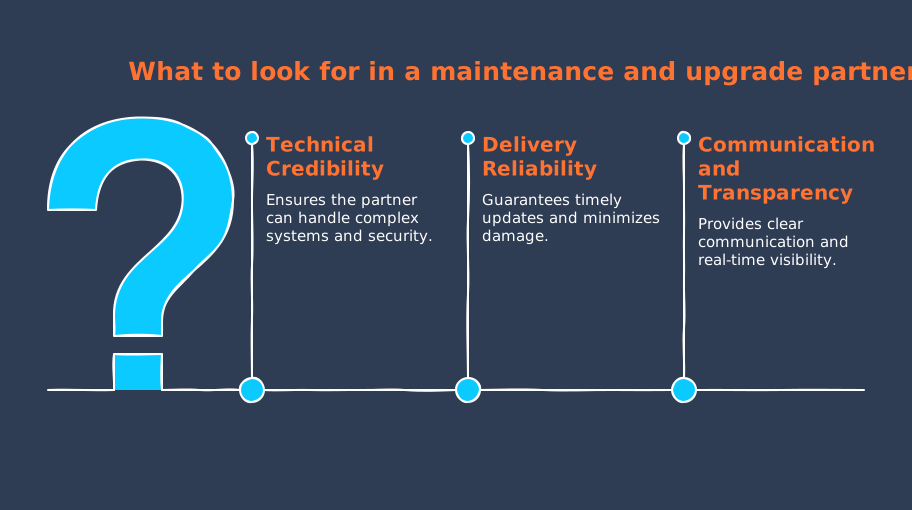
What Should You Look for in a Maintenance and Upgrade Partner?
Technical Credibility
Any credible bespoke website development partner ought to show their work. Not just pretty screenshots - actual evidence that they can keep complex systems running month after month. Here's what to demand:
- Relevant certifications: ISO 27001 (information security), GDPR compliance expertise, and cloud provider partnerships (AWS, Google Cloud)
- Verifiable case studies: Not just flashy designs - look for documented long-term support relationships with measurable outcomes
- Performance metrics: Ask for typical Core Web Vitals scores, uptime percentages, and average response times from existing clients
- Security track record: How do they handle vulnerability patching? What's their incident response process?
And here's a trick most buyers skip: actually test their work. Pull up sites they maintain in Google PageSpeed Insights or GTmetrix. If an agency brags about speed optimisation but their own clients' pages crawl, you've learned everything you need to know in about forty-five seconds.
Delivery Reliability
Reliability isn't some abstract virtue here. It's the whole reason you're hiring externally. A missed security patch or a delayed plugin update can cascade into real damage - lost orders, exposed customer data, or a site that simply goes dark at the worst possible moment. So ask blunt questions and expect precise answers:
- What percentage of your projects ship on time?
- What's your average response time for critical issues?
- How many concurrent clients does your team support?
- What happens when a critical vulnerability is discovered at 2 AM?
The best agencies on Clutch consistently hit 90%+ on-time delivery. That number matters. If a prospective partner can't quote you a specific figure - or worse, seems confused by the question - they almost certainly don't measure it. Walk away.
Communication and Transparency
You need a full-service website development partner you can actually reach when something goes wrong. Sounds obvious. Yet an astonishing number of businesses sign twelve-month contracts with teams that vanish into a ticketing system the moment the ink dries. Don't be one of them.
- A dedicated account manager (not a rotating cast of strangers)
- Regular check-in meetings - weekly or fortnightly, depending on scope
- A project management dashboard (Jira, Asana, Monday.com) with real-time visibility
- Clear escalation paths documented in the SLA
Here's a diagnostic that costs you nothing: watch how they behave during the sales process. Slow replies? Generic copy-paste answers? Questions you asked that quietly go unanswered? That's not nerves. That's a preview of what the next twelve months will feel like.
How Much Do Ongoing Maintenance and Upgrades Cost in 2026?
There's no single answer - it depends on what you've built and how much hand-holding it needs. A five-page brochure site and a multi-currency e-commerce platform live in completely different maintenance universes. That said, the table below gives European businesses a grounded starting point:
| Website Type | Monthly Cost (€) | Annual Cost (€) | What's Included |
|---|---|---|---|
| Small business / brochure site | €90 – €460 | €1,100 – €5,500 | Updates, backups, basic security, minor content changes |
| Mid-size business / CMS-driven | €460 – €1,850 | €5,500 – €22,000 | Plugin management, performance monitoring, SEO upkeep, feature tweaks |
| E-commerce / custom web application | €1,850 – €4,600 | €22,000 – €55,000+ | Payment gateway maintenance, security audits, scaling, A/B testing support |
A decent rule of thumb that's held up well across our client base: set aside 10–15% of whatever your initial bespoke website development build cost. Spent €50,000 on the project? Plan for €5,000–€7,500 a year to keep the thing healthy, secure, and actually earning its keep.
Fast Fact: Global IT spending on software is expected to increase by 9.8% in 2026, exceeding €5.5 trillion. Businesses aren't cutting digital budgets - they're shifting spend from new builds toward maintaining and upgrading what they already have.
Red Flags When Hiring a Custom Web Development Services Team
Some agencies look brilliant on paper and fall apart in practice. Others wave red flags from the very first call if you know where to look. Save yourself the grief - here are the patterns we see trip up buyers again and again:
- Vague SLA terms: "We respond quickly" is not an SLA. You need specific commitments - e.g., "two-hour response for critical production issues."
- Suspiciously low rates: If someone quotes €18/hour for complex maintenance work, they're cutting corners on security testing, code review, or both.
- No references: Any agency worth hiring will happily connect you with existing long-term clients. Reluctance here is a dealbreaker.
- Purely hourly billing: Without fixed maintenance packages, there's a perverse incentive to drag out issue resolution. Look for tiered support plans with defined deliverables.
- No IP ownership clause: If your contract doesn't explicitly grant you ownership of custom code, you could be locked in forever.
- Outdated tech stack: If they're still proposing jQuery-heavy solutions without mentioning modern frameworks, performance tooling, or accessibility standards - move on.
A Practical Checklist for Vetting Your Next Partner
Print this out. Stick it on a wall. Run every candidate through it before you sign a single thing:
- ✅ Check Clutch, DesignRush, and at least one other directory for verified reviews
- ✅ Request 2–3 references from long-term maintenance clients (not just project clients)
- ✅ Ask for a sample SLA with specific response times, uptime guarantees, and escalation procedures
- ✅ Verify GDPR compliance processes - especially if you handle EU customer data
- ✅ Test the performance of sites they currently maintain
- ✅ Confirm IP ownership and data portability terms in writing
- ✅ Schedule a trial period (1–3 months) before committing to a 12-month contract
This is exactly how we've built our own custom web development services practice at Flexi IT. Transparent SLAs, a named account manager you can actually ring, and tiered maintenance packages shaped around what European businesses genuinely need - not what looks good on a slide deck. Evaluating options right now? We're happy to show you how our long-term support works in practice, no pitch theatrics required.
Key Terms
| Term | Definition |
|---|---|
| SLA (Service Level Agreement) | A formal contract defining response times, uptime guarantees, maintenance scope, and escalation procedures between a client and service provider. |
| Core Web Vitals | A set of Google metrics (LCP, FID/INP, CLS) measuring page load speed, interactivity, and visual stability - directly affecting search rankings. |
| Nearshoring | Outsourcing to a nearby country (e.g., a UK company hiring a team in Poland or Ukraine) for cost savings with minimal time-zone friction. |
| GDPR | The EU's General Data Protection Regulation - a legal framework governing how businesses collect, store, and process personal data of EU residents. |
| Bespoke Website Development | Custom-built web solutions tailored to specific business requirements, as opposed to template-based or off-the-shelf platforms. |
Summary: What a Busy CEO Needs to Know
- Start with vetted directories - Clutch, DesignRush, and DAN are the fastest ways to shortlist reliable custom web development services providers.
- Nearshore to Central/Eastern Europe for the best quality-to-cost ratio: €40–€75/hour vs. €60–€130 in Western Europe.
- Demand a proper SLA with specific response times, uptime guarantees, and documented escalation paths.
- Budget 10–15% of your build cost annually for maintenance - skipping this leads to security breaches, performance decay, and lost revenue.
- Check references from long-term clients, not just one-off projects. Retention rates above 90% signal a trustworthy partner.
- Avoid providers who can't give you specifics - vague answers about timelines, response times, or pricing are red flags.
- Consider a trial period of 1–3 months before locking into a long-term contract.
After a custom web application development company that sticks around for the hard part, not just the launch party? Talk to Flexi IT. We specialise in bespoke website development and long-haul support for European businesses that refuse to treat their web presence as an afterthought.


