
Start with verified directories. The official Woo Partner programme, Clutch, GoodFirms, and Codeable all vet agencies based on technical chops, client feedback, and actual delivery track records. But finding candidates is the easy part - knowing what separates a genuinely capable WooCommerce agency from a slick website with mediocre developers is a sharper eye. You'll want to scrutinise portfolios for projects resembling yours, confirm certifications aren't expired or exaggerated, gauge how they communicate under pressure, and verify they actually understand where e-commerce is heading in 2026.
In this guide, we'll cover:
- The best directories and platforms for discovering reputable WooCommerce development agencies
- Essential criteria for evaluating technical expertise and cultural fit
- Realistic pricing expectations across European markets
- Critical mistakes that derail agency partnerships (and how to avoid them)
- What forward-thinking agencies should prepare you for heading into 2026
Where Should You Start Your Search for a WooCommerce Development Agency?
The official Woo Partner programme is your best first stop. WooCommerce rebuilt this directory from scratch with far tougher vetting than before. It's now a curated marketplace - only agencies clearing serious hurdles get listed. Each applicant faces a three-round gauntlet: an initial interview probing experience and reputation, a technical review where WooCommerce's own team dissects actual code samples, and a final assessment examining site stability, security practices, and responsiveness. Filters let you sort by time zone, language, industry expertise, and budget range. Finding agencies that operate in your region and understand your sector takes minutes, not days.
2025 Data Point: WooCommerce powers over 5 million online stores globally, representing approximately 35% of all ecommerce websites - making specialised expertise increasingly valuable.
Independent B2B review platforms add another layer of validation. Clutch actually phones past clients - no self-reported puff pieces, just verified project experiences from people who've worked with these agencies. Aim for partners with 4.5 stars or higher and 15-20 reviews; that volume signals consistent delivery across varied projects, not a handful of friendly testimonials. GoodFirms runs a similar verification model and covers European agencies particularly well. DesignRush has grown into a behemoth - over 10,000 agencies listed - with solid filtering for design-focused WooCommerce work.
Codeable warrants special attention. It's not a review site. It's a specialised marketplace built exclusively for WordPress and WooCommerce projects. Their screening process is brutal in the best way: live interviews testing communication and technical thinking, coding quizzes, trial projects evaluated by community veterans, and mandatory certification courses covering quality standards and GDPR compliance. Every expert on Codeable has earned their spot. That rigour translates to genuine confidence when you hire.
What Criteria Matter Most When Evaluating a WooCommerce Development Company?
Technical Expertise and Certifications
Technical skill is the filter that matters most. Full stop. A credible WooCommerce development company demonstrates command of PHP, MySQL, WordPress architecture, REST APIs, and contemporary frontend frameworks. Hunt for agencies holding current certifications through the Woo Partner programme - tiers run from Verified up through Silver, Gold, and Platinum - or WordPress VIP Partner status. Both demand ongoing proof of competency, not just a one-time exam passed years ago.
Vague claims of "WooCommerce experience" tell you nothing. Push harder. Ask about custom plugin development. Probe their integration history with CRMs, ERPs, and inventory platforms. Have they built multi-currency stores serving multiple European markets? Can they handle performance tuning for traffic spikes during Black Friday or seasonal peaks? If you need a specific integration - say, connecting WooCommerce to your SAP instance - demand case studies proving they've done it before. No case study? Red flag.
Portfolio Depth and Relevant Case Studies
Ask for five to ten recent case studies. Recent means within the past year - WooCommerce evolves quickly, and old work might reflect outdated practices. Quality case studies walk you through the client's problem, the solution architecture, the technical implementation specifics, the project timeline, and the measurable outcomes. Vague before-and-after screenshots don't count. You want conversion rate lifts, load time reductions, and revenue growth figures.
Diversity matters too. Agencies serving only one industry may struggle adapting to your sector's quirks. Look for varying store scales - from lean catalogues with fifty products to sprawling marketplaces with thousands of SKUs. Custom integrations signal advanced capability. Measurable business results prove they understand commerce, not just code. Pay attention to the specific problems they solved: did they rescue a site buckling under holiday traffic? Slash page load times by half? Build a subscription engine with custom billing logic? Those stories reveal a depth of problem-solving that generic portfolios hide.
Team Composition and Communication
Who actually touches your project? This question trips up many buyers. Will senior developers architect the critical systems, or does everything get handed to juniors the moment the ink dries on the contract? How many people will work in your store? Who handles your day-to-day questions? Reputable agencies assign experienced developers to significant builds and maintain a stable team composition throughout the engagement. Constant rotation is a warning sign.
Communication style shapes everything. Professional agencies run scheduled standups, send weekly status reports, designate clear points of contact, and track progress in real-time project management tools you can access. Before signing anything, nail down expectations: How often will they update you? Which tools will you use? How do change requests work? What happens at 2 AM when something breaks? Write it all down. Verbal assurances evaporate under pressure.
How Much Does a WooCommerce Agency Actually Cost?
Pricing swings wildly based on geography, project complexity, and agency pedigree. Here's what European businesses should realistically budget:
| Agency Type | Hourly Rate (EUR) | Project Cost Range (EUR) |
|---|---|---|
| Western European (UK, Germany, France) | €80 – €160 | €10,000 – €45,000+ |
| Scandinavian | €75 – €120 | €8,000 – €35,000 |
| Eastern European (Poland, Romania) | €40 – €80 | €5,000 – €20,000 |
| Basic store implementation | - | €1,500 – €5,000 |
| Mid-level with customisation | - | €5,000 – €10,000 |
| Enterprise/complex builds | - | €10,000 – €45,000+ |
Pricing Reality Check: Senior WooCommerce specialists with 5+ years of dedicated experience command €100-€200+ per hour across European markets. This premium reflects genuine productivity differentials - senior developers complete complex work faster, write more maintainable code, and identify architectural issues before they become expensive problems.
Custom plugin work adds €400 to €8,000+ depending on scope. Ongoing maintenance retainers - covering security patches, performance monitoring, and incremental feature work - typically run €500- €2,500 per month for established stores. Factor these into your total cost of ownership from day one.
What Mistakes Should You Avoid When Hiring a WooCommerce Design Agency?
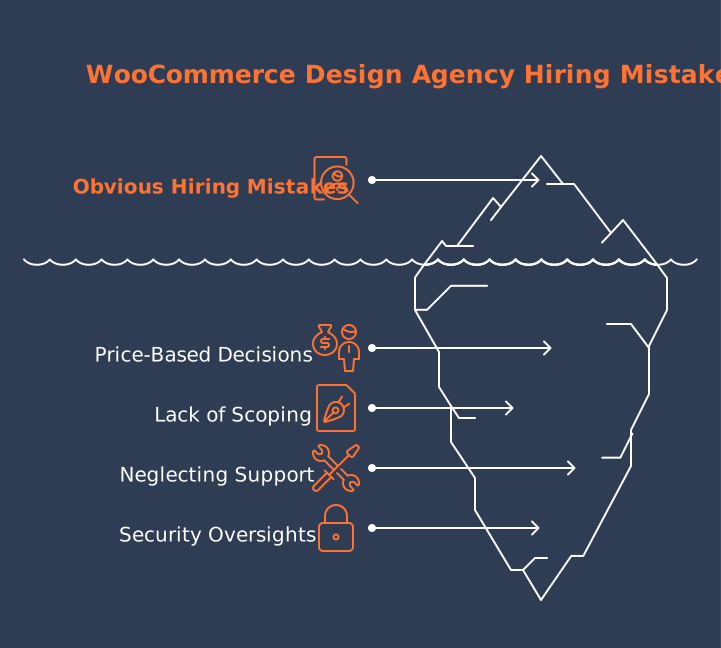
Choosing Based Solely on Price
Cheap rarely stays cheap. Inexperienced developers write bloated, brittle code that creates performance nightmares, security holes, and maintenance headaches down the road. Your store might launch fine. Then traffic spikes hit. Or you try adding a new feature. Or WordPress releases a major update. Suddenly, you're staring at a rebuild costing three times what you "saved" by going with the budget.
Skipping Proper Scoping
Vague briefs kill projects. Before anyone writes a line of code, document every feature, plugin, design element, and integration in excruciating detail. List what's explicitly excluded, too - ambiguity breeds scope creep. Get sign-off on wireframes before development starts. Establish a formal change order process: any out-of-scope request gets priced and approved in writing before work begins. This discipline saves relationships.
Ignoring Post-Launch Support
Many buyers obsess over the build and forget what comes after. Your WooCommerce store requires ongoing updates, security patches, performance tuning, and feature refinement. Clarify maintenance terms upfront: What's bundled? What triggers extra charges? What's the emergency response time when checkout breaks on a Saturday? Agencies that vanish after launch aren't partners. They're vendors who've cashed out.
Overlooking Security and Compliance
WooCommerce stores handle payment details and personal data. Non-negotiables include PCI-DSS compliance for card processing, GDPR obligations for European customers, SSL implementation, disciplined update schedules, tight user permissions, and ongoing vulnerability monitoring. Your agency should be able to speak fluently about all of this without prompting. If security feels like an afterthought, walk away.
What Should a Modern WooCommerce Agency Prepare You For in 2026?
E-commerce is shifting fast. A sharp WooCommerce website design agency won't just build what you ask for today - they'll steer you toward what actually matters next year:
AI-Powered Personalisation
Artificial intelligence is rewriting how shoppers discover products. Modern stores deploy algorithms analysing behaviour in real time - predicting preferences, automating inventory decisions, serving personalised promotions before customers even know they want them. Nearly half of shoppers already use AI tools for at least one buying task. Your store needs to work for AI-driven discovery, not just human browsing. If your agency isn't talking about this, they're behind.
Mobile-Only Performance
Mobile devices now generate over 65% of WooCommerce traffic. Mobile-first thinking has become a mobile-only reality. Stores loading under two seconds see conversion rates 40% higher than sluggish competitors. Your agency must prioritise blistering load times, intuitive touch navigation, and checkout flows stripped of friction. Desktop-first designs are relics.
Social Commerce Integration
Social platforms aren't just traffic sources anymore - they're storefronts. TikTok Shop alone is projected to generate €19 billion in sales in 2026. Your store should plug seamlessly into these channels, support shoppable content natively, and harness user-generated material that converts far better than polished ads. Agencies that ignore social commerce are ignoring where your customers already spend their time.
Looking Ahead: Subscription-based models are projected to account for over 35% of WooCommerce store revenue by 2027. If recurring revenue suits your business model, ensure your agency has deep experience with WooCommerce Subscriptions and related payment infrastructure.
Key Terms

- Woo Partner Programme: WooCommerce's official certification and directory for vetted development agencies, with tiers from Verified to Platinum.
- Headless Commerce: Architecture separating the frontend presentation layer from the backend WooCommerce engine, enabling greater flexibility and performance.
- PCI-DSS: Payment Card Industry Data Security Standard - compliance requirements for handling credit card transactions.
- Scope Creep: Gradual expansion of project requirements through incremental unplanned requests, often derailing timelines and budgets.
Summary for Busy Leaders
- Start your search with the official Woo Partner directory, Clutch, GoodFirms, or Codeable - platforms that verify agency credentials
- Prioritise technical depth over flashy portfolios; ask about specific certifications, integration experience, and security practices
- Budget realistically: Western European agencies charge €80-€160/hour; complex stores cost €10,000-€45,000+
- Avoid the cheapest option - poor code quality creates expensive technical debt and security vulnerabilities
- Define scope rigorously before development begins, with formal change order processes for additions
- Clarify post-launch support expectations, including response times, maintenance inclusions, and ongoing costs
- Ensure 2026-readiness: AI personalisation, mobile-only performance, and social commerce integration are now essential
Ready to Build Your WooCommerce Store?
Finding the right WooCommerce agency demands effort. The payoff - a fast, secure, scalable store that actually drives revenue - makes it worthwhile. At Flexi IT, we build WooCommerce stores for European businesses, pairing great technical skill with practical commercial sense. New builds, platform migrations, and performance rescues for struggling stores - we handle it all.
We're a WordPress WooCommerce agency that values straight talk, clear timelines, and stores that perform. If you're weighing your options among WooCommerce development agencies, reach out. We're happy to talk through your project scope, realistic timelines, and what success actually looks like for your business.


