
How to Find an n8n Developer for Lead Capture and Follow-Up Automations in 2026
Skilled n8n developers hang out in three places: freelance platforms like Upwork and Toptal, specialised automation agencies such as Goodspeed Studio and Flowmondo, and the n8n community forums where seasoned practitioners hunt for contract work. That's the short answer. The longer answer? Knowing where to look matters less than knowing what separates a genuinely competent developer from someone who'll hand you workflows that implode the moment real traffic hits them.
Here's what we'll cover:
- The best platforms and agencies for hiring n8n developers in Europe
- What a lead capture automation actually involves (and why it matters)
- Essential skills to verify before signing any contract
- Realistic pricing for 2026 (spoiler: it's not as scary as you think)
- Red flags that signal trouble ahead
- How to evaluate portfolios and references properly
Why n8n for Your Marketing Funnel?
First things first. Why n8n specifically?
The platform's growth has been staggering. By late 2025, n8n had crossed 230,000 active users worldwide. Their Series C round - backed by Accel and NVIDIA's venture arm - pushed the valuation to €2.3 billion. This isn't marketing fluff. It's serious enterprise validation from people who scrutinise balance sheets for a living.
Fast Fact: 75% of new n8n workflows now incorporate AI or LLM integrations, making it the go-to platform for businesses wanting intelligent automation rather than basic if-this-then-that logic.
For lead capture and marketing funnel work, n8n brings three concrete advantages to the table:
- Self-hosting capability: Your lead data stays on your servers, which matters enormously for GDPR compliance
- Execution-based pricing: You pay per workflow run, not per task - complex multi-step automations don't rack up astronomical bills
- Genuine flexibility: Custom JavaScript nodes mean developers can implement exactly what your business needs, not what some pre-built connector allows
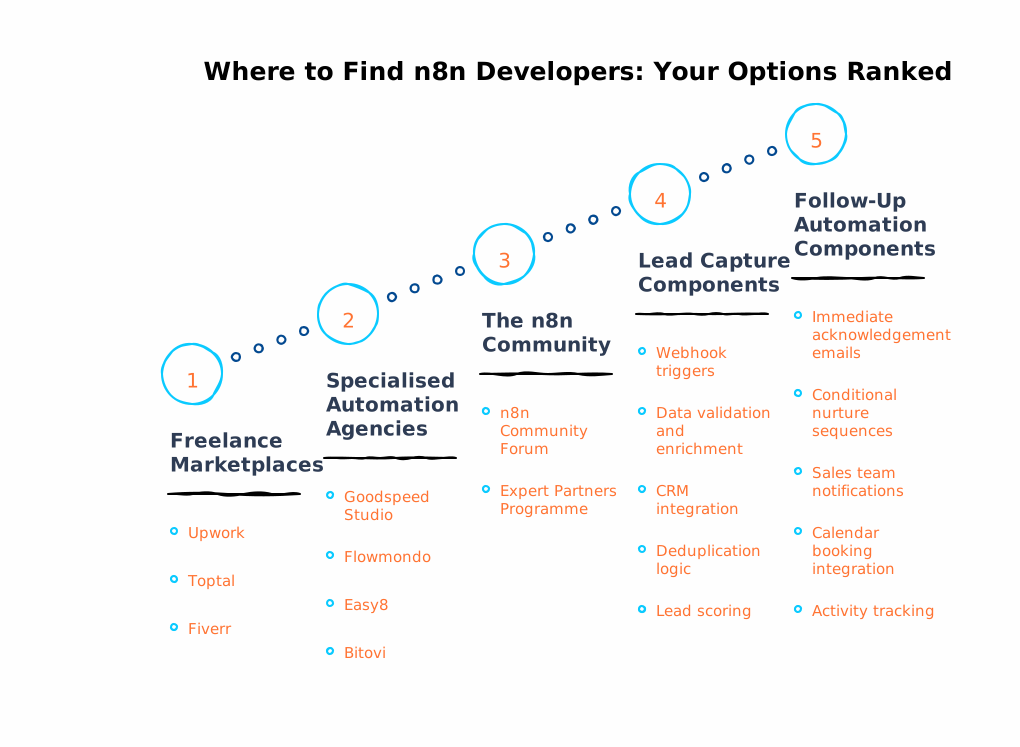
Where to Find n8n Developers: Your Options Ranked
1. Freelance Marketplaces
Upwork has the largest talent pool. Rates typically fall between €20–€55 per hour, depending on experience and geography. The platform's advantage is sheer volume - post a job and you'll have proposals landing within a day. The downside? Quality is wildly inconsistent. Plenty of developers slap n8n on their profile after watching one YouTube tutorial.
Toptal operates differently. They screen developers before letting them into the network. You'll pay a premium - €50–€85 per hour is typical - but the vetting process weeds out the amateurs. When your marketing funnel requires stitching together five different systems, that quality assurance often justifies the extra cost.
Fiverr has its place. Need someone to troubleshoot an existing workflow? Fix a minor bug? Fine. Building a production-ready lead capture system from the ground up? Keep scrolling.
2. Specialised Automation Agencies
This is where serious implementations happen.
Goodspeed Studio sits in the UK and holds official n8n partner status. They push what they call "automation-first" product development. Their Automation Accelerator package - €5,000 for four production-ready workflows - typically wraps up in 2–4 weeks. They've shipped over 200 no-code product launches. More importantly, they train your team to maintain the workflows themselves. No vendor lock-in nonsense.
Flowmondo is another UK outfit. Their focus? Enterprise-ready n8n deployments. They've watched enough implementations crash and burn to know that poor architecture kills most n8n projects in production. With 975+ customers served globally, they charge €5,000 for standard automations and €20,000+ when things get complicated.
Easy8 caters specifically to B2B teams running Microsoft tools. If Dynamics 365 or Teams anchors your marketing stack, their niche expertise becomes genuinely valuable. Expect 2–3 weeks for implementation, with optional monthly support if you want ongoing optimisation.
Bitovi brings 15+ years of development pedigree. They don't just use n8n - they contribute to its open-source codebase. Need a custom node for some obscure internal system? They'll build it. That matters when your lead capture has to talk to proprietary software nobody else supports.
3. The n8n Community
The n8n Community Forum at community.n8n.io runs an active Jobs section. Developers posting there tend to know the platform properly - they're the same people answering technical questions and publishing workflow templates for everyone else. Expertise runs deeper than your average freelancer.
The trade-off? No formal vetting. You're doing the due diligence yourself.
One more thing worth knowing: n8n rolled out an Expert Partners Programme in late 2025. It's still in pilot. As 2026 progresses and the programme matures, it should become a solid channel for finding pre-vetted talent.
What Does a Lead Capture Automation Actually Involve?
Time to get specific. A proper lead capture and follow-up system breaks down into distinct moving parts:
Lead Capture Components
- Webhook triggers from your forms (Typeform, Webflow, custom landing pages)
- Data validation and enrichment (checking email validity, pulling company data from Clearbit or similar)
- CRM integration (creating or updating records in HubSpot, Pipedrive, Salesforce)
- Deduplication logic (preventing the same lead from being created multiple times)
- Lead scoring (assigning priority based on behaviour and firmographic data)
Follow-Up Automation Components
- Immediate acknowledgement emails (speed matters - leads contacted within five minutes convert at 3x the rate of those waiting 30 minutes)
- Conditional nurture sequences based on lead source, score, or behaviour
- Sales team notifications for high-priority leads (Slack, Teams, email)
- Calendar booking integration (Calendly, Cal.com, or native calendar APIs)
- Activity tracking back to your CRM
2026 Reality Check: 91% of marketing teams now use AI in their workflows, up from 63% last year. Your lead capture automation should probably include AI-powered lead scoring or qualification - n8n's native LangChain integration makes this straightforward for competent developers.
Essential Skills to Verify Before Hiring
Not every n8n developer delivers the same results. Some build bulletproof systems. Others leave you with ticking time bombs. Here's how to spot the difference:
Technical Must-Haves
API Integration Expertise: Lead capture workflows connect external systems. Always. Your developer needs hands-on experience with REST APIs, OAuth authentication flows, webhook management, and - this is critical - handling API rate limits gracefully. Ask them directly: how would you manage HubSpot's API throttling during a traffic spike? Their answer tells you volumes.
Error Handling Awareness: Here's the big one. An analysis of 6,000+ public n8n workflows revealed a pattern: insufficient error handling causes most production failures. If a developer hasn't mentioned retry logic, failure alerts, or graceful degradation before you bring it up? That's a warning sign. They haven't shipped real production systems.
Custom Code Capability: Pre-built nodes cover maybe 80% of typical use cases. The remaining 20% - bespoke lead scoring algorithms, gnarly conditional logic, complex data transformations - demands JavaScript chops. Ask to see function nodes they've actually written.
Database Knowledge: The moment your workflows start talking to CRM databases or marketing platforms, SQL understanding becomes non-negotiable. Schema design. Duplicate prevention. Data integrity. These aren't nice-to-haves.
Business Process Understanding
Technical brilliance alone won't save you. Your developer should also grasp:
- Lead qualification frameworks (BANT, MEDDIC, or your custom criteria)
- How your sales team actually works with leads
- GDPR implications for processing personal data (especially consent management)
- The difference between a marketing qualified lead and a sales qualified lead
Here's a useful litmus test. If they don't ask questions about your current sales process? They're building what you described, not what you actually need. Those are different things.
Realistic Pricing for 2026
Let's talk numbers. The market this year looks like this:
| Engagement Type | Typical Cost | Best For |
|---|---|---|
| Freelancer (Upwork) | €20–€55/hour | Simple workflows, modifications |
| Vetted Freelancer (Toptal) | €50–€85/hour | Complex integrations, reliability matters |
| Agency (Fixed Scope) | €5,000–€20,000+ | Complete lead capture systems |
| Agency (Retainer) | €1,500–€10,000/month | Ongoing optimisation and support |
A typical lead capture and follow-up automation - connecting 3–5 systems, built with proper error handling and decent documentation - runs €5,000–€12,000 through an agency. Going the freelancer route? Budget 40–80 hours.
ROI Context: Businesses earn an average of €5.44 for every euro spent on marketing automation over three years. 76% see positive returns within the first year. A €10,000 investment in proper lead capture automation isn't an expense - it's infrastructure that pays for itself.
Red Flags: When to Walk Away
Some warning signs demand attention. Spot these early and save yourself months of headaches:
- Vagueness about past projects: If they can't clearly explain what they built, what challenges they faced, and how they solved them, they either lack experience or are misrepresenting it
- No discussion of error handling: Workflows that work in testing often fail in production. Developers who don't proactively discuss failure modes haven't shipped production systems
- Hardcoded credentials in shared examples: This indicates both security naivety and lack of professional experience
- Unrealistic timelines: "I can build your entire marketing automation in a weekend" should trigger immediate scepticism. Proper implementations take 2–4 weeks minimum
- No questions about your business: A developer who immediately starts discussing technical solutions without understanding your sales process will build the wrong thing
How to Evaluate Portfolios and References
Portfolio Review
Ask for examples of previous lead capture work. Then actually examine them. Look at:
- Workflow structure (is it modular or one massive tangled mess?)
- Error handling nodes (are they present at all?)
- Documentation (can you understand what the workflow does without explanation?)
- GitHub repositories (code organisation and commenting practices)
Reference Calls
Contact three previous clients. Ask these exact questions:
- How reliable are the workflows they built? Any production failures?
- How responsive were they when issues arose?
- Did they document everything thoroughly?
- Can your team modify the workflows independently, or are you dependent on them for changes?
That final question matters more than you'd think. Good developers leave you capable of managing things yourself. Mediocre ones leave you dependent on them indefinitely.
GDPR and Compliance Considerations
Operating in Europe? Compliance isn't optional. Your lead capture automation must handle:
- Record consent properly (when, where, what they agreed to)
- Support data subject access requests
- Enable deletion across all connected systems
- Maintain audit trails of data processing
The EU AI Act kicks in from August 2026. Any AI-powered lead scoring or qualification features trigger additional governance requirements. Make sure your developer understands these obligations - or work with an agency that bakes compliance into their process from the start.
Working with Flexi IT
We build n8n-powered lead capture and marketing automation systems for European businesses focused on growth. Our work blends technical implementation with a genuine understanding of how sales and marketing teams actually operate day-to-day.
What we specialise in:
- Lead capture workflows connecting your forms, CRM, and email marketing platforms
- AI-enhanced lead scoring using n8n's native LangChain integration
- GDPR-compliant automation with proper consent management
- Documentation and training so your team can maintain workflows independently
We're based in Ukraine, serving clients across the UK and wider Europe. That means competitive pricing without sacrificing quality or clear communication.
Key Terms
- n8n
- An open-source workflow automation platform that allows connecting different services and automating tasks through a visual interface or custom code.
- Webhook
- A method for one application to send real-time data to another when a specific event occurs (e.g., form submission triggers workflow).
- Lead Scoring
- A methodology for ranking prospects based on their perceived value, using factors like behaviour, demographics, and engagement.
- LangChain
- A framework for developing applications powered by large language models, which n8n supports natively for AI-enhanced workflows.
- API Rate Limiting
- Restrictions on how many requests can be made to an API within a given timeframe, requiring careful workflow design to avoid failures.
Summary: Finding Your n8n Developer
- Best platforms: Toptal for vetted freelancers, Goodspeed Studio or Flowmondo for agency partnerships, n8n community forums for experienced practitioners
- Budget realistically: €5,000–€12,000 for a complete lead capture system with proper error handling
- Verify error handling expertise: This single factor predicts production reliability more than any other
- Check business understanding: Developers who don't ask about your sales process will build the wrong thing
- Demand documentation: You should be able to modify workflows without calling your developer
- Consider GDPR from day one: Retrofitting compliance is expensive and risky
- Expect 2–4 weeks: Anyone promising faster delivery for complex automations is either cutting corners or underestimating scope
Want to discuss your lead capture automation requirements? Reach out to Flexi IT. We'll review your needs and give you honest advice - whether you end up working with us or not.


