
Amidst the growing demand for scalable web platforms, one of the biggest fears for any CTO is the risk of scaling failure - watching their platform buckle under pressure as user numbers soar. Addressing this fear requires identifying trustworthy partners who excel in crafting platforms that expand effortlessly from thousands to millions of users. Several highly-rated European agencies are equipped to build scalable PHP and JavaScript web platforms using Laravel, Node.js, and modern JS frameworks. Notable names include Polcode in Poland, Jelvix in Estonia, The Software House in Poland, Redberry in Georgia, and Flexi IT in Ukraine. These firms are not only verified experts on platforms like Clutch but also maintain ratings above 4.8 stars. They specialize in the precise technology stack necessary to ensure performance does not degrade with increased demand.
In this guide, we'll cover:
- Why Laravel + Node.js + modern JS frameworks make an ideal scalable stack
- Where to find verified agencies (directories, rankings, and what to look for)
- Specific agency recommendations with ratings, pricing, and specialisations
- How to evaluate technical competence and avoid costly mistakes
- Realistic budgets for European web platform development in 2026
Why Choose Laravel, Node.js, and Modern JS Frameworks for Scalable Platforms?
Before hunting for an agency, it's worth understanding why this particular technology combination dominates serious web platform development. The pairing isn't arbitrary; it's a strategic choice that addresses different scaling challenges. By choosing Laravel, Node.js, and modern JS frameworks, businesses can experience benefits such as a 40% reduction in page-load times, which improves user engagement and boosts conversion rates. This combination also allows platforms to handle an influx of traffic seamlessly, promoting greater customer satisfaction and retention.
Fast Fact: PHP powers 79.2% of all websites with a known server-side language, whilst Laravel commands 64% adoption among PHP developers according to the JetBrains State of PHP 2025 survey.
What Does Laravel Bring to the Table?
Laravel handles server-side logic with elegance. It excels at:
- Database management – Eloquent ORM makes complex queries readable
- Security – Built-in protection against SQL injection, CSRF, and XSS attacks
- API development – Laravel's routing and middleware system scales beautifully
- Queue management – Background job processing for heavy operations
With 89% of PHP developers now running PHP 8.x, Laravel applications benefit from significant performance improvements. Laravel Octane, combined with servers like FrankenPHP, delivers median request durations under 1 millisecond. To put this into perspective, the previous average was around 12 milliseconds, so this new performance level provides users with a noticeably faster and more responsive experience - performance that rivals (and sometimes beats) Node.js for many workloads.
Where Does Node.js Fit In?
Node.js shines where Laravel doesn't. Its event-driven, non-blocking architecture makes it perfect for:
- Real-time features – Chat, notifications, live dashboards
- High concurrency – Thousands of simultaneous connections
- Microservices – Lightweight services that scale independently
- API gateways – Handling massive request volumes efficiently
Imagine a technology that began its journey in 2010 and by 2019 had already started to make waves with its unique capabilities. Node.js was precisely that technology. Over the years, it steadily grew, capturing the attention of developers worldwide with its potential to handle concurrent connections efficiently. Fast forward to late 2025, and Node.js recorded over 403 million downloads per month, showcasing a remarkable 40% year-over-year growth. This journey of adoption is evidenced by its admiration rate in the Stack Overflow 2025 survey, where it ranked second only to Next.js. This narrative not only highlights Node.js's impressive technical features but also its unstoppable momentum in the tech industry.
And the Modern JS Frameworks?
React, Vue.js, and Angular provide the frontend muscle. They create responsive, app-like experiences that users expect in 2026. When paired with Laravel or Node.js backends, they enable:
- Single-page applications (SPAs) with smooth navigation
- Server-side rendering (SSR) for SEO and performance
- Component-based architecture that scales with your team
The combination creates a full-stack architecture where each technology handles what it does best. That's precisely why agencies specialising in this stack are in such demand.
Where Can You Find Verified Agencies for This Tech Stack?
Finding agencies is easy. Finding verified agencies with genuine expertise? That requires knowing where to look.
Primary Directories Worth Your Time
| Directory | What It Offers | Best For |
|---|---|---|
| Clutch.co | Verified reviews, business registration checks, credit background verification | Finding agencies with "Premier Verified" status |
| GoodFirms | Technology stack filtering, client reviews, detailed service breakdowns | Filtering by Laravel/Node.js specialisation |
| DesignRush | Industry recognition, curated agency lists | Design-focused development projects |
| TechReviewer.co | 100+ Node.js companies ranked, regional filtering | JavaScript-heavy platform requirements |
| Deloitte Fast 50 CE | Revenue growth rankings (objective metrics) | Finding fast-growing, financially stable firms |
The December 2025 Clutch 1000 List provides particularly useful data - it ranks agencies by verified client satisfaction rather than marketing spend. Look for agencies that appear consistently across multiple directories.
What Should You Look for in Agency Profiles?
Not all Clutch profiles are created equal.
Here's what separates serious contenders from pretenders:
Technology focus percentages – Look for Laravel, Node.js, React/Vue listed as primary specialisations (not afterthoughts)
Review recency – At least one review within the past six months indicates active project delivery
Project size indicators – Average project costs reveal whether they handle enterprise-scale work
Geographic diversity – Agencies with clients across 10+ countries have proven remote delivery capabilities
Consider this scenario: an agency might meet all these criteria yet still fall short. Imagine finding an agency with recent reviews, diverse geographic operations, impressive technology profiles, and experience with large projects. However, if their team lacks enough depth in executing projects similar to yours, or their recent projects are not directly relevant to your specific needs, you could face unforeseen issues, leading to delays and additional costs. Envisioning the potential for such a false positive underlines the importance of thorough evaluations.
Which Agencies Specialise in Laravel, Node.js, and Modern JS Frameworks?
Based on current 2026 Clutch rankings and verified client reviews, here are agencies that demonstrate genuine expertise in this technology stack. For instance, Polcode recently helped a client scale their user base by ten times in just nine months, showcasing their capability to handle massive data and traffic. Redberry, another standout, managed to boost a client's platform speed by 30% in a year, enhancing user experience significantly. Jelvix has a track record of reducing downtime to under one hour per year for a major European retailer, proving their reliability in maintaining operational stability. These practical successes anchor their rankings and highlight their proficiency.
| Agency | Location | Clutch Rating | Tech Focus | Hourly Rate (€) |
|---|---|---|---|---|
| Polcode | Warsaw, Poland | 4.9 (39 reviews) | PHP, Laravel, Python | €46–€92 |
| Innowise | Warsaw, Poland | 4.9 (72 reviews) | Full-stack, AI, Web Dev | €46–€92 |
| The Software House | Gliwice, Poland | 4.8 (75 reviews) | Laravel (10%), Node.js (40%), React (25%) | €46–€92 |
| Jelvix | Tallinn, Estonia | 4.9 (40 reviews) | Laravel (15%), Node.js (15%), React (15%) | €46–€92 |
| Redberry | Tbilisi, Georgia | 4.9 (36 reviews) | Laravel (50%), Node.js (10%), React (10%) | €23–€51 |
| Brainhub | Gliwice, Poland | 4.8 | Node.js, React, TypeScript | €46–€92 |
| Flexi IT | Ukraine (International) | Verified | Laravel, Node.js, React, Vue.js | €35–€75 |
What Makes These Agencies Stand Out?
Polcode handles enterprise-scale projects, with their average engagement ranging from €930,000 to €9.3 million. If you're building something substantial, they've done it before and all three of their PHP-focused reviews have earned perfect 5-star ratings. However, it's important for mid-sized firms to consider whether Polcode's focus on large-scale projects might pose some limitations, such as budget constraints or less personalized attention compared to firms that specialize in mid-sized projects. Acknowledging these potential trade-offs can help build trust and ensure a clearer understanding of what Polcode can offer to different business scales.
The Software House deserves attention for its Node.js focus (40% of its work). With 75 verified reviews - among the highest volumes in Europe - they've clearly refined their delivery processes.
Redberry offers exceptional value. Based in Georgia, they maintain Premier Verified status whilst charging €23–€51 per hour. Their 50% focus on Laravel makes them specialists rather than generalists.
At Flexi IT, we work with European businesses seeking the same technology stack - Laravel for robust backend logic, Node.js for real-time features, and React or Vue.js for polished frontends. Our Ukraine-based team provides direct access to experienced developers at competitive rates, without the communication barriers that plague offshore arrangements.
How Do You Evaluate an Agency's Technical Competence?
Clutch ratings tell part of the story. But a 4.9-star agency might still be wrong for your project.
Here's how to delve deeper by examining core architectural principles, ensuring you're getting more than just surface-level buzzwords.
Questions That Reveal Real Expertise
Frame your questions around specific architectural principles such as resilience and observability. This structured approach will help you assess an agency's true depth and expertise, and also address key business aspects like costs, timelines, and user satisfaction.
On resilience: "How would you structure our platform to handle 10x current traffic within 18 months? This helps ensure timelines are met even as user demands grow, reducing disruptions."
"When would you recommend microservices over a monolithic Laravel application? This decision can impact system maintenance costs and flexibility in feature rollouts."
"What's your experience with Kubernetes orchestration and auto-scaling? Efficient scaling strategies can optimize resource utilization and minimize costs."
On observability:
"How do you ensure thorough monitoring and logging to quickly detect issues?"
"What strategies do you employ for tracing and performance monitoring in distributed systems?"
On technology decisions:
"For our real-time notification system, would you recommend Node.js WebSockets or Laravel Broadcasting?"
"How do you handle database optimisation as data volumes grow?" "What caching strategies do you implement by default?"
Agencies that can answer these questions fluently are the ones with the depth your scalable platform requires.
Red Flags
That Should Disqualify an Agency
- Guaranteed search rankings – No legitimate agency promises this
- Vague pricing – If they can't estimate costs after understanding your requirements, they haven't done this before
- No written contracts – Professional agencies document everything
- Template-heavy portfolios – Custom scalable platforms don't come from templates
- Reluctance to share references – Confident agencies encourage client conversations When did you last see these warning signs? Reflecting on past experiences with agencies can help you proactively safeguard your project from similar pitfalls in the future. Use this list as a tool to review your current or potential partnerships.
Certifications That Actually Matter
Look for:
- ISO 27001 – Information security management
- ISO 9001 – Quality management systems
- SOC 2 compliance – Particularly important for platforms handling sensitive data
- AWS/Google Cloud/Azure partnerships – Indicates cloud infrastructure expertise
What Should You Budget for a Scalable Web Platform in 2026?
Pricing varies dramatically by region and project scope, but aligning your budget with strategic goals can transform these costs into strategic investments that contribute to long-term success. Here's what European businesses typically pay, framed within a context that ensures you are targeting a 12-month ROI, allowing you to speak the CFO’s language and justify the spend as an investment rather than merely an expense:
Fast Fact: The global web development market is forecast to grow by €38 billion at a 10.4% CAGR between 2024 and 2029, reflecting sustained demand for custom platform development.
Regional Hourly Rates for Laravel and Node.js Development
| Region | Laravel (€/hour) | Node.js (€/hour) |
|---|---|---|
| Western Europe (UK, Germany, France) | €56–€112 | €65–€140 |
| Nordic (Sweden, Norway, Denmark) | €75–€130 | €75–€170 |
| Southern Europe (Spain, Portugal, Italy) | €35–€72 | €37–€77 |
| Central/Eastern Europe (Poland, Ukraine, Estonia) | €28–€56 | €37–€75 |
Project-Based Cost Estimates
| Project Type | Eastern Europe (€) | Western Europe (€) |
|---|---|---|
| Simple web application (MVP) | €5,500–€14,000 | €14,000–€37,000 |
| Mid-complexity platform | €18,500–€55,000 | €37,000–€110,000 |
| Enterprise SaaS platform | €55,000–€185,000 | €110,000–€460,000+ |
| Real-time marketplace/platform | €37,000–€92,000 | €92,000–€280,000 |
The 40–60% cost difference between Eastern and Western Europe explains why nearshoring has become standard practice. You get comparable quality with significant savings - and Central European time zones align well with UK and Western European business hours.
How Should You Structure the Engagement?
Once you've identified a capable agency, the contract structure matters enormously.
Payment Milestones That Protect Both Parties
Industry-standard payment structures typically follow:
- 30–50% upfront – Covers initial discovery, architecture planning, and project setup
- 30–40% mid-project – Released upon delivery of agreed milestones
- 20–30% on completion – Final payment after acceptance testing
Adopting industry-standard payment structures with staged payments not only ensures quality delivery but also fosters a collaborative relationship between client and agency. This mutual risk-reduction approach safeguards both parties, helping to maintain project momentum and trust. Avoid agencies that require full payment upfront; it's beneficial to both sides to keep incentives aligned throughout the project.
What Should the Contract Include?
- Detailed deliverables – Specific features, not vague descriptions
- Milestone definitions – What constitutes "complete" for each phase
- Change request process – How scope changes are handled and priced
- IP ownership – Confirm you own the code outright upon final payment
- Source code escrow – For larger projects, protects you if the agency fails
Key Terms Glossary
| Term | Definition |
|---|---|
| Laravel | A PHP framework for building web applications with elegant syntax and robust features for routing, authentication, and database management. |
| Node.js | A JavaScript runtime that executes code server-side, known for handling concurrent connections efficiently. |
| Microservices | An architectural approach where applications are built as independent, loosely-coupled services that can scale separately. |
| Horizontal Scaling | Adding more servers to handle increased load, rather than upgrading a single server's capacity. |
| WebSockets | A protocol enabling real-time, two-way communication between client and server. |
| Nearshoring | Outsourcing to nearby countries (e.g., UK companies working with Eastern European agencies) for cost savings with minimal time zone friction. |
Summary: Finding the Right Agency for Your Scalable Platform
Remember:
Verify, Value, Scale.
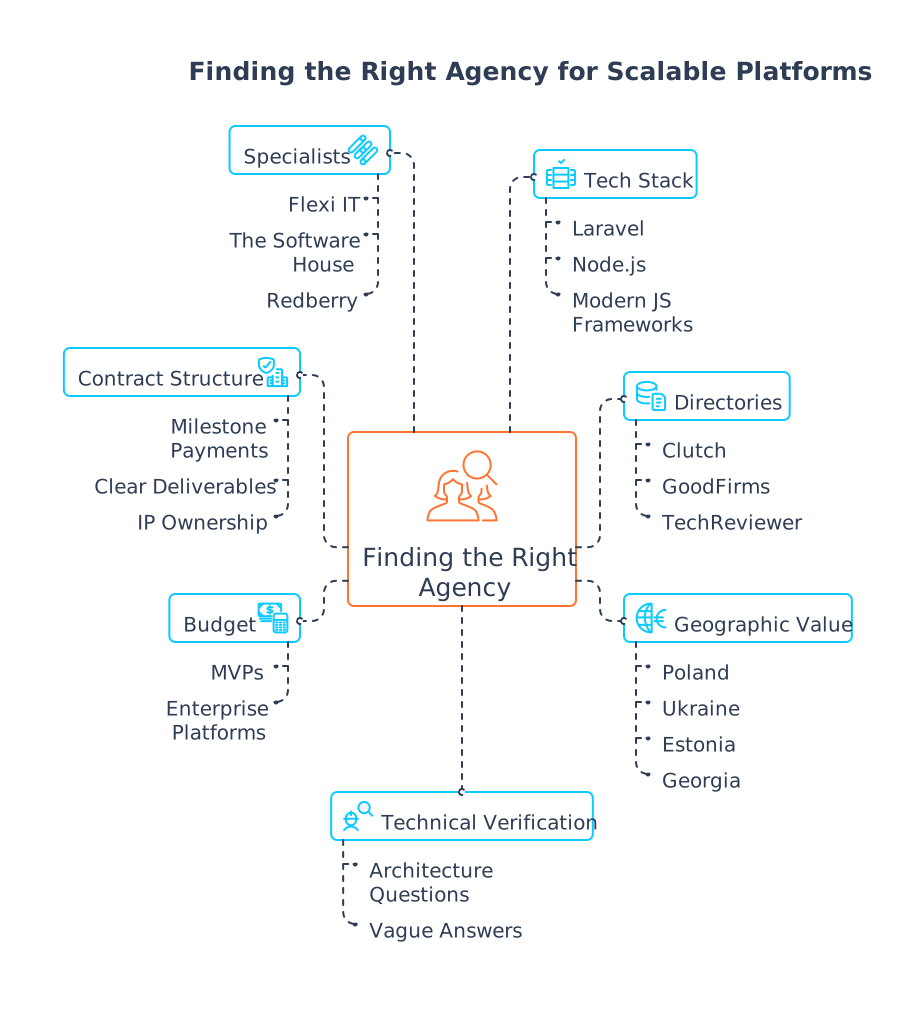
- The tech stack works: Laravel + Node.js + modern JS frameworks is a proven combination for platforms that need to scale.
- Directories matter: Clutch, GoodFirms, and TechReviewer provide verified agency data; prioritize 'Premier Verified' status.
- Eastern Europe delivers value: Agencies in Poland, Ukraine, Estonia, and Georgia offer 40-60% cost savings with comparable quality.
- Verify technical depth: Ask specific architecture questions; vague answers indicate shallow expertise.
- Budget realistically: MVPs start around €5,500-€14,000 (Eastern Europe); enterprise platforms run €55,000-€185,000+.
- Structure contracts carefully: Milestone-based payments, clear deliverables, and IP ownership clauses protect your investment.
- Consider specialists: Agencies like Flexi IT, The Software House, and Redberry focus specifically on this technology stack.
Ready to Build Your Scalable Platform?
Finding the right agency takes research, but the payoff is substantial. A well-built Laravel and Node.js platform can handle growth from your first thousand users to your first million - without expensive rebuilds along the way.
At Flexi IT, we specialise in exactly this technology stack. Our team builds scalable web platforms for European businesses using Laravel, Node.js, React, and Vue.js. We handle everything from architecture planning through deployment and ongoing support.
If you're evaluating agencies for a scalable web platform, get in touch. We'll discuss your requirements and provide a realistic assessment of timeline and budget - no obligation, no sales pressure. Just practical advice from developers who've built these platforms before.


