
Looking to hire specialists for high-converting corporate landing pages with custom animations? Your best bet: verified agency directories like Clutch, DesignRush, and GoodFirms. Or go direct. Established European agencies such as Flexi IT specialise in conversion-focused design paired with motion graphics that actually move the needle. The real trick isn't finding agencies - it's vetting them properly through portfolio reviews, case studies showing real conversion lifts, and conversations that reveal whether they grasp both the technical craft and the strategic thinking behind conversion rate optimisation.
In this guide, we'll cover:
- Where to find qualified landing page design agencies in Europe
- Which custom animation trends actually drive conversions in 2026
- How to evaluate agencies and spot red flags
- What to expect in terms of pricing (€3,000–€25,000 range)
- Essential questions to ask before signing a contract
Why Custom Animations Matter for Corporate Landing Pages in 2026
Here's the uncomfortable truth: static landing pages are haemorrhaging money. Not a little. A lot. The numbers from early 2026 paint a stark picture about what purposeful motion design actually delivers in commercial terms.
2026 Data Point: Corporate websites combining kinetic typography with micro-interactions are achieving conversion rate improvements of 30% to 86% compared to conventionally designed static pages.
Custom animations pull their weight in three specific ways on landing pages:
- Attention direction: Animated elements guide the visitor's eye exactly where you want it - typically toward your call-to-action
- Trust building: Polished motion design signals investment and professionalism, which directly influences purchase decisions
- Engagement extension: Interactive elements keep visitors on-page longer, giving your message more time to resonate
Average landing page conversion rates? About 6.6% across industries. The top performers with strategic animation? They regularly crack 20%. Sometimes higher. That gap isn't academic - it's revenue walking out the door.
Where Can You Find Qualified Landing Page Design Experts?
Finding capable agencies demands a two-pronged approach: verified directories first, then direct portfolio scrutiny. Neither alone suffices. Start here:
Agency Directories with Verification Standards
| Directory | Strengths | Best For |
|---|---|---|
| Clutch.co | Verified client reviews, detailed service breakdowns, interview-based testimonials | B2B companies seeking agencies with documented track records |
| DesignRush | Curated agency lists, advanced filtering by location and specialisation | Finding agencies with specific animation or industry expertise |
| GoodFirms | Comprehensive review system, industry-specific categorisation | Comparing multiple agencies systematically |
| TechBehemoths | Extensive European coverage, IT and web development focus | Finding regional specialists across the EU |
Direct Outreach to Specialised Agencies
Directories get you started. But the engagements that actually work? They come from rolling up your sleeves and examining portfolios yourself. Hunt for firms showing:
- Live landing pages they've built (not just Figma mockups)
- Case studies with specific conversion metrics
- Experience with your industry or similar B2B contexts
- Technical capability in modern animation frameworks (GSAP, Lottie, WebGL)
At Flexi IT, we've noticed something consistent over the years. The best client relationships start when businesses arrive with concrete conversion targets rather than woolly requests for "something that looks nice." Any agency worth hiring will push back on purely aesthetic briefs. They'll ask what you're actually trying to achieve.
What Animation Techniques Are Driving Conversions This Year?
Not all animations earn their keep. Some genuinely boost conversion rates. Others just bloat your page and irritate visitors. Here's what's delivering results in 2026:
Micro-Interactions: The Silent Conversion Drivers
Small. Purposeful. Often invisible to conscious attention. These animations respond instantly to user actions. A button shifting colour on hover. A form field flashes green after valid input. A subtle shake when something's wrong.
Why They Work: Micro-interactions tap into basic human psychology by triggering emotions, building confidence, and guiding behaviour without users consciously noticing. When users click a button, and it responds visibly, they receive confirmation that their action has registered - eliminating the uncertainty that leads to form abandonment.
Corporate B2B landing pages demand restraint here. Go too playful and you'll undermine credibility faster than you built it. Stick to clean, purposeful movement. Confirm actions. Guide users forward. Nothing more.
Kinetic Typography in Hero Sections
Text that moves. Transforms. Responds. This has become one of the sharpest tools for grabbing attention in hero sections. Variable fonts, animated headlines, responsive type - they anchor the best-performing landing pages we're seeing.
Balance matters enormously here. Kinetic typography shines for headlines and key messages. Apply it to body copy or navigation? You've just sacrificed readability for flash. Don't.
2026 Data Point: Sites employing animated headlines that reveal progressively on scroll report 30% to 50% improvements in time-on-page metrics compared to static typography.
Scroll-Triggered Animations and Parallax
Parallax scrolling still works. Background elements gliding more slowly than foreground content create genuine depth perception. What changed? Implementation. The shift from JavaScript-driven parallax to CSS-based approaches was critical - GPU acceleration instead of CPU strain means buttery-smooth performance.
2026 Data Point: 60% of users are more likely to scroll to the end of a web page if it includes interactive scroll-triggered animations.
Extended scroll depth isn't vanity. It's a micro-conversion metric that matters. Users who explore your entire page convert at dramatically higher rates than those who bounce halfway through.
Glassmorphism and Soft Transparency
Those frosted-glass panels appearing everywhere? They're addressing a real problem: design fatigue. Years of ultra-flat minimalism left interfaces feeling sterile. Apple's Liquid Glass design system legitimised glassmorphism as something lasting, not fleeting.
For corporate landing pages, the effect adds perceived premium quality. Done well, layered transparency and depth evoke high-end industrial design rather than basic flat UI. That signals reliability. Innovation. Attention to craft.
How Do You Evaluate an Agency Before Hiring?
Discovery is simple. Evaluation is hard. Distinguishing genuinely capable agencies from the merely competent requires a systematic approach. Gut feeling won't cut it.
Portfolio Assessment Criteria
Demand live websites. Not concepts. Reputable agencies showcase functioning landing pages with clear ownership attribution in footers or copyright notices. Generic portfolios? Password-protected galleries? Collections of mockups with no live implementations? Red flags. All of them.
Interrogate conversion claims. Anyone can say they "increased conversions." Push harder. What was the baseline? The improvement? Over what period? Measured how? Vague answers reveal vague thinking.
Probe technical sophistication. Specifically, ask about their approach to:
- Page speed optimisation (pages loading within one second convert at three times the rate of five-second pages)
- Core Web Vitals compliance
- Mobile-first responsive design
- Animation performance and accessibility
Review Authenticity Checks
Legitimate reviews on Clutch include meaty written feedback, the reviewer's full name and title, plus company affiliation. Single-sentence testimonials? Fewer than 10 reviews total? Dig deeper before proceeding.
Cross-reference across platforms. Consistent praise on Clutch, Google Reviews, and LinkedIn carries far more weight than glowing feedback confined to one site.
Red Flags That Should Concern You
| Warning Sign | What It Suggests |
|---|---|
| Full payment required upfront | Potential fraud or cash flow problems |
| Guaranteed top Google rankings | Either dishonest or technically naive |
| Suspiciously low pricing | Outsourced work or template-based delivery |
| Vague answers to technical questions | Limited in-house expertise |
| Pressure for quick decisions | Sales-focused rather than delivery-focused |
| No written contracts offered | Unprofessional operations |
What Should You Expect to Pay for High-Converting Landing Pages?
Pricing across European markets swings wildly depending on complexity, customisation depth, and where an agency positions itself. Here's what the 2026 landscape actually looks like:
Project-Based Pricing
| Project Type | Typical Price Range (€) | Timeline |
|---|---|---|
| Basic single-page landing page | €800–€1,500 | 2–3 weeks |
| Conversion-optimised landing page with standard animations | €1,500–€3,000 | 3–5 weeks |
| Custom landing page with advanced animations | €3,000–€8,000 | 4–8 weeks |
| Enterprise landing page with complex integrations | €8,000–€25,000+ | 6–12 weeks |
Additional Costs to Budget For
- Professional copywriting: €500–€2,000 (critical for conversion - don't skip this)
- Custom photography or video: €400–€1,500
- Advanced animation/motion graphics: €2,000–€5,000 additional
- A/B testing setup: €300–€800
- Ongoing optimisation: €500–€2,500 monthly
Hourly Rates by Provider Type
For time-and-materials engagements, expect these ranges:
- Freelance designers: €25–€100/hour
- Small to mid-size agencies: €50–€150/hour
- Large agencies and specialists: €100–€300+/hour
- Eastern European agencies: €15–€50/hour (reflecting different cost structures, not necessarily quality differences)
What Questions Should You Ask Before Signing?
First conversations reveal everything. How an agency responds tells you more than their website ever could. These questions cut through the noise:
About Their Process
- "How do you approach conversion rate optimisation specifically for landing pages?"
- "What research do you conduct before beginning design?"
- "How do you balance animation impact with page performance?"
- "What's your testing methodology for validating design decisions?"
About Technical Implementation
- "What animation frameworks do you use, and why?"
- "How do you ensure animations work smoothly on mobile devices?"
- "What's your approach to Core Web Vitals and page speed?"
- "How do you handle accessibility for users who prefer reduced motion?"
About Results and Accountability
- "Can you share specific conversion improvements from similar projects?"
- "What metrics do you track to measure landing page success?"
- "Do you offer post-launch optimisation services?"
- "What happens if the landing page doesn't meet agreed performance targets?"
Specific, confident answers signal expertise. Waffle signals the opposite. At Flexi IT, we actively encourage these conversations - they help both sides determine whether a partnership makes sense before anyone signs anything.
How Long Does the Process Typically Take?
Honest timelines for landing pages with custom animations look like this:
- Discovery and strategy (1–2 weeks): Understanding your business goals, target audience, competitive landscape, and conversion objectives
- Design and prototyping (2–3 weeks): Creating wireframes, visual designs, and animation concepts for review
- Development and animation implementation (2–4 weeks): Building the landing page with all technical functionality and motion design
- Testing and optimisation (1–2 weeks): Cross-browser testing, performance optimisation, and initial A/B test setup
Total: 6–11 weeks for proper execution. Anyone promising delivery in under 4 weeks for anything beyond a basic page? They're cutting corners. Somewhere. Count on it.
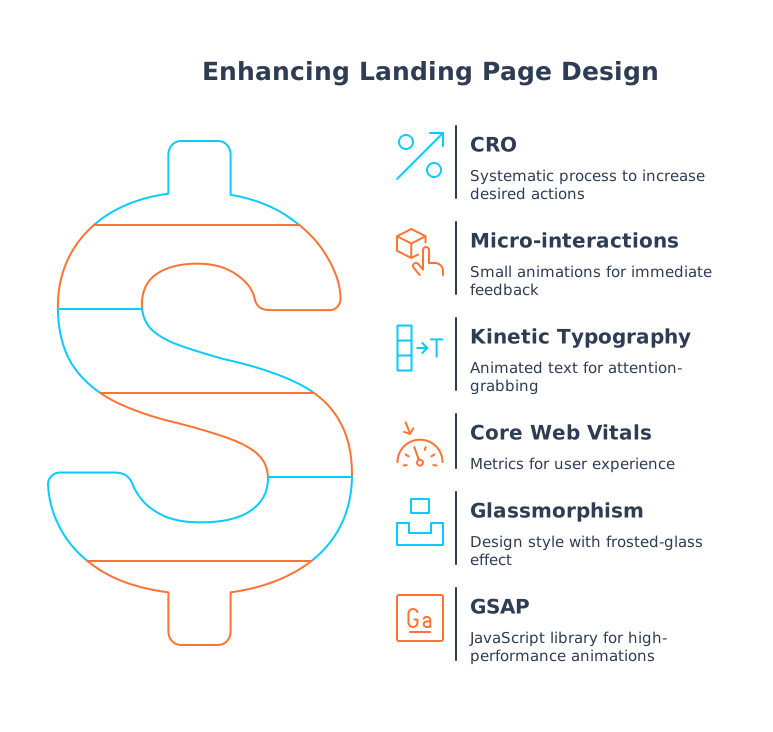
Key Terms
- Conversion Rate Optimisation (CRO)
- The systematic process of increasing the percentage of website visitors who take a desired action - filling out a form, making a purchase, or requesting a demo.
- Micro-interactions
- Small, single-purpose animations that provide immediate feedback for user actions, such as button hover states or form validation indicators.
- Kinetic Typography
- Animated text that moves, transforms, or responds to user interaction, commonly used in hero sections to capture attention.
- Core Web Vitals
- Google's metrics for measuring user experience: Largest Contentful Paint (loading), First Input Delay (interactivity), and Cumulative Layout Shift (visual stability).
- Glassmorphism
- A design style using semi-transparent layers with blur effects to create a frosted-glass appearance, adding depth and premium perception.
- GSAP (GreenSock Animation Platform)
- A professional-grade JavaScript animation library widely used for creating high-performance web animations.
Summary: What Busy Decision-Makers Need to Know
- Where to find experts: Start with Clutch, DesignRush, and GoodFirms, then verify portfolios directly
- Budget range: €3,000–€25,000 for landing pages with custom animations, depending on complexity
- Timeline: 6–11 weeks for proper execution; faster promises usually mean compromised quality
- Animation ROI: Well-implemented animations can improve conversion rates by 30–86%
- Key evaluation criteria: Live portfolio examples, documented conversion improvements, technical sophistication, and transparent communication
- Red flags: Full upfront payment, guaranteed rankings, vague technical answers, pressure tactics
- Essential animations for 2026: Micro-interactions, kinetic typography, scroll-triggered reveals, and glassmorphism effects
Ready to Build a Landing Page That Actually Converts?
We've spent years helping businesses across Europe build landing pages that marry strategic conversion thinking with technically sophisticated animation. Not decoration for decoration's sake - purposeful motion that drives measurable results. If you want a team that understands both the creative and commercial dimensions of landing page development, let's talk.
Get in touch with Flexi IT to start the conversation.


