
The best way to get a professional WordPress website designed for your small business is to partner with a specialist WordPress design agency that offers a structured discovery process, transparent pricing, and post-launch support. You can find reputable providers through verified directories like Clutch or DesignRush, evaluate their portfolios against your industry, and confirm they'll hand over full ownership of your site. For most small businesses, expect to invest between €1,000 and €5,000 for a quality 5-to 15-page website - though that figure increases quickly with e-commerce or custom functionality.
In this guide, we'll cover:
- Why WordPress remains the wise choice for small business websites
- Your three main options: DIY, freelancer, or agency
- How to evaluate and vet potential WordPress web designers
- Realistic costs and timelines for 2025-2026
- Red flags that should send you running
- Design trends worth considering for the year ahead
Why WordPress Still Makes Sense for Small Business Website Design
Before diving into how to get your site built, let's address the "why WordPress" question briefly. After all, there's no shortage of website builders promising drag-and-drop simplicity.
Fast Fact: As of 2025, WordPress powers 43.4% of all websites globally and commands 61.3% of the CMS market - more than all other content management systems combined.
That dominance isn't accidental. WordPress offers something rare: genuine flexibility without vendor lock-in. You own your content, your domain, and your data. If you ever want to switch hosting providers or bring in a different development team, you can. Try doing that with a proprietary website builder.
For small businesses specifically, WordPress delivers:
- Cost control: No monthly platform fees eating into margins
- Scalability: Start with a brochure site, add e-commerce later
- SEO advantages: Clean code structure and countless optimisation plugins
- Ecosystem depth: Over 60,000 plugins for virtually any functionality
The platform's maturity also means finding skilled WordPress web designers is straightforward - unlike niche platforms where talent pools run thin.
Your Three Options for Getting a WordPress Site Designed
Small business owners typically face three paths when commissioning website design for WordPress. Each has trade-offs worth understanding.
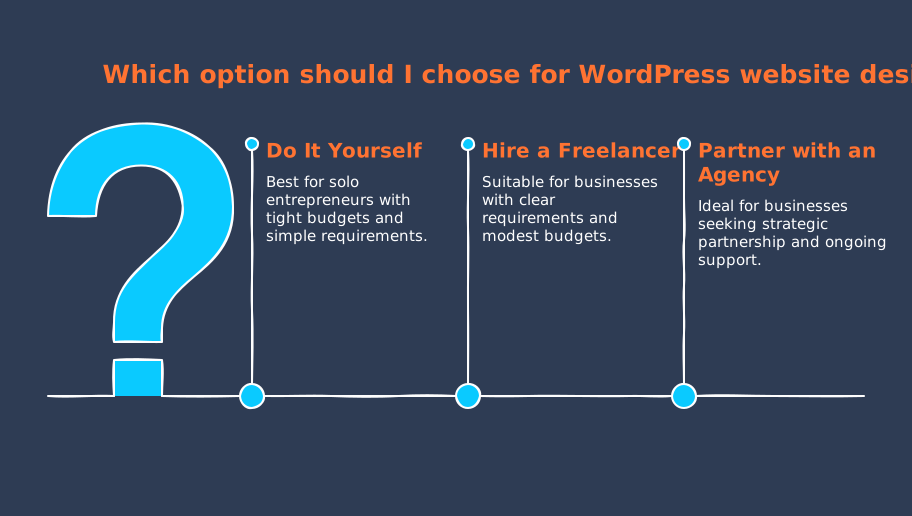
Option 1: Do It Yourself
Modern page builders like Elementor and the native WordPress block editor have made DIY more accessible than ever. If you're comfortable learning new tools and have time to spare, you can launch a basic site for under €500 (hosting, domain, and perhaps a premium theme).
Best for: Solo entrepreneurs with tight budgets, simple requirements, and a genuine interest in learning the platform.
The catch: What you save in money, you spend in time. And unless you understand responsive design, SEO fundamentals, and security best practices, your "savings" might cost you in lost opportunities or future fixes.
Option 2: Hire a Freelance WordPress Web Designer
Freelancers offer a middle ground - professional expertise without agency overheads. Rates vary widely by location and experience. In Western Europe, expect €65-€140 per hour; Eastern European freelancers typically charge €35-€75 per hour for comparable quality.
Best for: Businesses with clear requirements, modest budgets (€1,500-€4,000), and the ability to manage the project themselves.
The catch: Freelancers juggle multiple clients. If yours goes on holiday, falls ill, or gets busy, your project stalls. There's also the "bus factor" - what happens if they disappear entirely?
Option 3: Partner with a WordPress Design Agency
Agencies bring teams: strategists, designers, developers, and project managers working together. This structure ensures greater accountability, broader skill sets, and continuity if any team member becomes unavailable.
Best for: Businesses wanting a strategic partner, not just a vendor. Those with budgets starting around €3,000 and expectations of ongoing support.
The catch: Higher costs and potentially slower timelines due to more structured processes. Though that structure often prevents the scope creep and miscommunication that plague freelancer relationships.
How Much Does Custom WordPress Website Design Actually Cost?
Let's talk numbers. Pricing varies based on complexity, customisation level, and who's doing the work. Here's what European small businesses should expect in 2025:
| Website Type | Typical Cost Range | Timeline |
|---|---|---|
| Template-based (DIY or light customisation) | €500 – €2,500 | 1-2 weeks |
| Small business site (5-15 pages, custom design) | €1,000 – €5,000 | 3-5 weeks |
| Semi-custom (template + custom elements) | €3,000 – €8,000 | 4-6 weeks |
| Fully custom design | €10,000 – €30,000+ | 8-12 weeks |
| E-commerce / WooCommerce | €5,000 – €30,000+ | 6-12 weeks |
These ranges reflect professional work from reputable providers. If someone quotes you €500 for a "custom WordPress website," they're either using a template and calling it custom, or they're dangerously inexperienced.
Budget Tip: For affordable WordPress web design that doesn't sacrifice quality, consider agencies based in Eastern Europe. At Flexi IT, we deliver the same calibre of work as London or Berlin agencies - at rates that make sense for growing businesses.
Where to Find a Reliable WordPress Web Design Company
Knowing where to look is half the battle. Here are the most reliable channels:
Verified Agency Directories
- Clutch.co: The gold standard for B2B reviews. Filter by WordPress specialisation, location, and budget. Look for agencies with 4.7+ stars and at least 10 verified reviews.
- DesignRush: Curates top agencies with portfolio evaluations. Their monthly Design Awards highlight standout projects.
- GoodFirms: Offers verified reviews with detailed service breakdowns and hourly rate transparency.
WordPress-Specific Resources
- WordPress.com Partner Directory: Officially vetted agencies with proven track records
- WordCamp events: Annual conferences where you can meet agencies face-to-face
- Local WordPress meetups: Community-vetted recommendations from people who've worked with local providers
Peer Referrals
Nothing beats asking someone in your industry who built their site. A recommendation from a business owner who's been through the process carries more weight than any directory listing.
How to Evaluate a WordPress Design Agency Before Signing
Finding candidates is easy. Vetting them properly? That's where most small business owners stumble. Here's what to examine:
Portfolio Quality
Don't just look at screenshots. Visit the actual websites they've built. Check:
- Page load speed (use Google PageSpeed Insights - scores should hit 80+ on mobile)
- Mobile responsiveness (does it actually work on your phone?)
- Design consistency and attention to detail
- Whether the sites are still live and maintained
Process Transparency
Ask them to walk you through their process. A credible WordPress design agency will describe distinct phases: discovery, wireframing, design, development, testing, and launch. If they can't articulate this clearly, they're winging it.
Client References
Request references and actually contact them. Ask about communication, deadline adherence, and how the agency handled problems - because problems always arise.
Post-Launch Support
What happens after launch? Websites need ongoing maintenance: security updates, plugin compatibility, and performance monitoring. Clarify what's included and what costs extra.
Red Flags That Should Make You Walk Away
Experience has taught us (and our clients) to watch for these warning signs:
- Skipping discovery: Any agency that jumps straight to design without understanding your business, audience, and goals is building blindly.
- Guaranteed results: "Page 1 on Google in 30 days" is a lie. Run.
- Vague pricing: If they can't provide an itemised quote, expect surprise invoices later.
- Template masquerading as custom: Ask directly whether they're using a pre-built theme. There's nothing wrong with templates - but you should know what you're paying for.
- Ownership restrictions: You should own your domain, have full admin access, and be able to leave whenever you want.
- Unresponsive during sales: If they're slow to reply before they have your money, imagine how they'll behave afterwards.
Questions to Ask Before Hiring Any WordPress Web Designer
Arm yourself with these questions during initial conversations:
- "Can you walk me through your discovery process?"
- "Who specifically will work on my project, and will they be available throughout?"
- "Will I own my domain and have full admin access?"
- "Show me three recently launched projects and their PageSpeed scores."
- "What's included in post-launch support, and what costs extra?"
- "What happens if the project scope changes mid-way?"
- "Can you provide an itemised breakdown of costs?"
The answers reveal more than any sales pitch ever could.
Design Trends Worth Considering for 2026
If you're investing in a new website now, it should feel current for at least 2-3 years. Here's what's shaping WordPress website design heading into 2026:
Organic, Human-Centred Aesthetics
After years of rigid minimalism, design is softening. Expect flowing shapes, soft gradients, and layouts that feel less robotic. As AI becomes more prevalent, users crave warmth and humanity in digital experiences.
AI-Powered Personalisation
Websites that adapt content based on visitor behaviour are becoming standard. This doesn't require enterprise budgets anymore - WordPress plugins now enable basic personalisation for small business sites.
Performance as a Design Principle
Google's Core Web Vitals aren't going away. Fast-loading, accessible websites rank better and convert better. Any designer who treats performance as an afterthought is already outdated.
Accessibility by Default
With accessibility regulations tightening across Europe, building inclusive websites isn't optional. Ensure your chosen agency understands WCAG guidelines and implements them from the start.
Key Terms Glossary
CMS (Content Management System)
- Software that lets you create and manage website content without coding. WordPress is the most popular CMS globally.
WooCommerce
- A free WordPress plugin that adds e-commerce functionality, powering over 33% of all online stores.
Core Web Vitals
- Google's metrics for measuring user experience: loading speed, interactivity, and visual stability.
Discovery Phase
- The initial project stage where an agency gathers requirements, analyses competitors, and defines project scope.
WCAG
- Web Content Accessibility Guidelines - international standards for making websites usable by people with disabilities.
Summary: Getting Your Small Business WordPress Site Right
- Best approach: Partner with a specialist WordPress agency offering discovery, transparent pricing, and ongoing support
- Typical investment: €1,000-€5,000 for a quality small business site; €5,000-€30,000+ for e-commerce
- Where to search: Clutch, DesignRush, GoodFirms, or peer referrals within your industry
- Key vetting criteria: Portfolio quality, process clarity, client references, post-launch support
- Major red flags: Skipped discovery, guaranteed SEO results, vague pricing, ownership restrictions
- Timeline: Allow 3-5 weeks minimum for a professional small business site
- 2026 focus: Human-centred design, performance optimisation, and accessibility compliance
Ready to Discuss Your WordPress Project?
At Flexi IT, we specialise in custom WordPress website design for European small businesses and growth companies. We combine the expertise of a full-service agency with the responsiveness and value that comes from our Eastern European base. No inflated London prices, no communication barriers - just solid work delivered by people who genuinely care about your results.
Whether you're starting from scratch or migrating from another platform, we'd be happy to talk through your requirements and provide a transparent, itemised quote. Get in touch and let's see if we're the right fit.


