
Searching for a skilled Gutenberg developer can be overwhelming and confusing, especially if you are unsure where to look or what qualifications to prioritise. Platforms like Codeable, which vet only the top 2% of applicants, offer straightforward access to highly qualified experts. Agency directories such as Clutch and DesignRush, as well as specialised WordPress agencies like Flexi IT, are solid alternatives. Focus on verifying JavaScript and React skills, reviewing block-specific portfolios, and checking genuine client reviews. Developer rates typically range from €50 - €180 per hour, with projects spanning €2,000 for simple blocks to €20,000+ for complex work. Now that you know why the search is challenging, let's outline what you'll learn in this guide:
Why Gutenberg Block Developers Are in High Demand This Year
WordPress has fundamentally changed. Gutenberg now runs on over 50% of all WordPress sites worldwide, with roughly 157,000 posts flowing through the block editor every single day. To put that into perspective, it's like producing enough content to fill a popular news site every hour. This isn't some passing fad; it's become the standard way people build with WordPress.
Fast Fact: According to 2025 data, websites built with Gutenberg load 30-50% faster than those using traditional page builders, with mobile PageSpeed scores averaging above 90.
That performance gap explains the hiring rush. Businesses want developers who can craft WordPress custom blocks from scratch rather than bolting on third-party page builders. Custom blocks produce cleaner code. They score better on Core Web Vitals. And crucially, they remain maintainable years down the line something page builder sites notoriously struggle with.
WordPress has now entered Phase 3 of its Gutenberg roadmap. Real-time collaboration is coming - think Google Docs-style editing. Throughout 2026, demand for skilled block developers will continue to climb.
Where to Find Gutenberg-Experienced WordPress Developers
Specialist WordPress Platforms
Once you know what to look for in a developer, it's time to explore the best places to find them. Codeable sits at the top of the pile for vetted WordPress talent. Roughly 2% of applicants make it through. The platform maintains over 300 WordPress experts and has worked with more than 25,000 clients. Their screening includes portfolio reviews, live coding tests, and a 90-day trial period. You can filter specifically for Gutenberg and custom block expertise, which saves considerable time. Notably, Codeable boasts a high average project rating and a median turnaround time that sets industry standards, reinforcing its reputation for reliable expertise. Codeable uses a single-estimate model - no bidding wars. Outline your project, get matched, and receive a quote. Typical hourly rates are €70–€130 for experienced block developers.
Toptal markets itself as the "top 3% of freelance talent" and asks for a €340 deposit upfront (credited to your first project). It's not WordPress-specific, but their developers often bring broader full-stack experience - genuinely useful when your blocks need to integrate with complex systems. Premium rates, yes. Premium expertise to match.
Upwork provides a large pool of developers at rates from €12 - €180 per hour. You’ll need to handle vetting yourself, as prices and expertise vary widely.
Agency Directories and Professional Networks
In addition to freelancer platforms, agency directories offer another targeted way to find genuine Gutenberg specialists. Clutch, DesignRush, and GoodFirms compile verified client reviews for WordPress agencies across Europe. Filter by service type, location, and project size. Here's a quick checklist to streamline your search: Look for agencies with case studies that highlight WordPress Gutenberg blocks or custom block development. Avoid listings that vaguely mention 'WordPress development' without specifics on block expertise.
The Kinsta Agency Directory curates WordPress professionals who actively use Kinsta's managed hosting. This creates a useful quality filter. Agencies listed there maintain active relationships with enterprise-grade hosting infrastructure, which signals a certain level of seriousness.
Don't overlook the WordPress.org job board. It connects you with developers genuinely engaged in the WordPress community. Many WordPress core contributors frequent this space, bringing cutting-edge knowledge of Gutenberg's latest capabilities that freelancers on general platforms often lack.
Working with Established Agencies
Not every project suits freelance talent. For those who want additional structure, WordPress agencies provide project management, quality assurance, and accountability that individual developers simply cannot guarantee. At Flexi IT, we have built custom Gutenberg blocks for a wide range of industries, including dynamic content blocks for publishers, complex product configurators for e-commerce, and interactive data displays for professional services. Working with an agency allows you to access multiple specialists at once: a React developer managing the block's JavaScript, a PHP developer overseeing server-side rendering, and a designer ensuring that the editing experience makes sense for content teams. Additionally, our expertise has been recognized with the [Third-Party Award Name], a testament to the quality and impact of our services. A client from [Client Industry] praised us for our ability to deliver solutions that significantly improved their workflow.
Essential Technical Skills to Verify
Transitioning from hiring options to competencies, it’s important to note that not every WordPress developer can build custom blocks. Gutenberg development demands a specific skill set that many traditional WordPress developers never acquired.
For Native WordPress Gutenberg Blocks
To future-proof your blocks, developers need strong native JavaScript skills. Key competencies:
- React fundamentals – Gutenberg is built on React; block developers must understand component architecture, state management, and hooks
- Node.js and npm – For managing dependencies and build processes
- Webpack/build tools – Understanding how blocks get compiled and bundled
- WordPress Block API – Specifically
registerBlockType(), block attributes, and the@wordpress/create-blockscaffolding tool - REST API knowledge – For blocks that fetch dynamic content
Try this: ask candidates to explain the difference between the edit and save functions in a block. Clear articulation? Good sign. Hesitation or vagueness? They're not ready for custom block work. Want to test your own understanding? Briefly describe how the edit and save functions differ in terms of their purpose and timing in block execution. Confident in your response? You're likely on the right track.
For ACF Gutenberg Blocks
Advanced Custom Fields takes a PHP-based approach to block development, unlike the JavaScript-heavy process required by native blocks. ACF Gutenberg blocks are created primarily in PHP, which often allows for faster delivery if your team has strong PHP skills and less React background. This approach is valid but technically different from native JavaScript/React block creation.
For ACF block development, verify:
- PHP proficiency – ACF blocks are registered and rendered in PHP
- ACF Pro experience – Understanding field groups, flexible content, and repeater fields
- WordPress theme development – ACF blocks live within themes, so template hierarchy knowledge matters
- Block versioning – Introduced in ACF 6.0, this affects backward compatibility
Which approach suits your project? It depends. To help you decide, use a quick self-assessment tool. Score your project based on factors such as complexity, performance requirements, and your team's existing skills. Native blocks offer greater flexibility and advanced features, making them ideal for complex, high-performance projects. ACF blocks reduce JavaScript complexity and compress development timelines, perfect for teams with strong PHP skills but limited React experience. A skilled developer should recommend the appropriate approach based on what you actually need - not what they happen to prefer.
Current Market Rates for Gutenberg Developers in 2026
Pricing varies considerably by geography, experience, and project complexity. Here's the European picture this year, with scenario anchors to help map these rates to practical examples:
Regional Hourly Rates
| Region | General WordPress Dev | Gutenberg Block Specialist |
|---|---|---|
| Western Europe (UK, Germany, France) | €50–€150/hour | €100–€200/hour |
| Nordic Countries | €80–€140/hour | €120–€180/hour |
| Southern Europe (Spain, Italy, Portugal) | €37–€77/hour | €60–€120/hour |
| Eastern Europe (Poland, Ukraine, Romania) | €30–€80/hour | €50–€140/hour |
Fast Fact: Custom Gutenberg block development commands a 20–40% premium over standard WordPress development rates, reflecting the specialised JavaScript and React skills required.
Experience-Based Pricing
- Junior developers (0–2 years): €20–€50/hour – Suitable for simple blocks with basic functionality
- Mid-level developers (2–5 years): €50–€100/hour – Can handle most custom block projects independently
- Senior developers (5+ years): €100–€180+/hour – Complex systems, performance optimisation, architectural decisions
Project-Based Pricing
Fixed-scope work? Expect these ranges:
- Simple custom block (basic content, simple styling): €2,000–€6,000
- Complex block with advanced features (dynamic content, conditional rendering): €6,000–€12,000
- Multi-block system (interconnected blocks, custom field integration): €12,000–€25,000+
Consider whether the price aligns with the market averages you just saw. A quote like €500 for custom WordPress Gutenberg blocks might suggest the developer hasn't understood the project scope or plans to deliver something that won't actually meet your needs. Engage in a quick self-check to ensure the offer is realistic and reliable.
How to Evaluate Portfolios and Verify Expertise
What to Look for in Portfolio Examples
Ask for live demonstrations of custom blocks. Generic WordPress sites prove nothing about block expertise. You want to see:
- Custom blocks functioning within the WordPress editor
- Evidence of responsive behaviour across devices
- Integration with WordPress patterns and reusable blocks
- InnerBlocks functionality (blocks that contain other blocks)
- Dynamic content loading from custom post types or APIs
Get candidates to walk through their technical approach on a previous project. How did they structure the block? What obstacles did they hit? How did they handle backward compatibility when updating existing blocks? The answers reveal more than any portfolio screenshot.
Verification Questions to Ask
These questions separate genuine experts from developers who've merely installed a block plugin and added it to their CV:
- "What's the difference between static and dynamic blocks, and when would you use each?"
- "How do you handle block deprecation when updating existing blocks?"
- "Can you explain how block context works for parent-child block communication?"
- "What's your approach to making custom blocks accessible?"
- "How would you optimise a block that loads external data?"
Confident, detailed answers? Good. Vague responses or deflection? They're overstating their capabilities. Move on.
Reference Checks
Contact previous clients who commissioned custom block work. Ask directly:
- Did the developer understand requirements clearly from the start?
- How did they handle unexpected challenges or scope changes?
- What was the code quality like? Did it cause issues later?
- Would you hire them again for similar work?
Enthusiastic references describing specific technical solutions? Reliable developer. Vague or hesitant responses? Proceed with caution.
Red Flags and Warning Signs to Avoid
Hiring the wrong developer costs far more than their fee. You'll pay in delayed launches, buggy code, and potentially rebuilding everything from scratch. I've seen it happen. Watch for these warning signs:
Technical Red Flags
- No JavaScript/React experience – They cannot build native Gutenberg blocks without these skills
- Reliance on block builder plugins – Tools like Lazy Blocks or Genesis Custom Blocks are fine for simple cases, but if a developer can't work without them, they lack the skills for complex custom work
- Confusion about ACF blocks vs native blocks – A qualified developer should clearly explain the differences and trade-offs
- No mention of
@wordpress/create-block– This is the standard scaffolding tool; unfamiliarity suggests outdated practices
Professional Red Flags
- Unwillingness to provide references – Quality developers take pride in their work and have satisfied clients willing to vouch for them
- Significantly underpriced quotes – €15/hour for Gutenberg block development signals inexperience or offshore developers with potential communication challenges
- Vague project estimates – "It depends" isn't an answer. Experienced developers can provide ranges based on similar past projects
- Poor communication in initial interactions – If responses are slow or unclear before you've paid, imagine how they'll be mid-project
- Avoiding written contracts – Professional developers document scope, timeline, payment terms, and intellectual property ownership
Structuring Your Engagement for Success
Define Requirements Clearly
Before contacting developers, document your needs: - What content types will the blocks handle - What editing controls users need - How blocks should render on the front end - Integration requirements (custom post types, APIs, third-party services) - Performance expectations If you have answers to all five, you're ready to brief candidates. Clear requirements produce accurate quotes and fewer mid-project surprises. Vague briefs create scope creep and budget overruns. Every single time.
Choose the Right Engagement Model
Hourly rates suit ongoing development or projects where requirements evolve. You pay for the time invested, with full transparency into the effort. Flexible, but budget certainty goes out the window.
Fixed-price projects give you predictable costs for well-defined scope. The developer absorbs overrun risk, which typically means higher effective hourly rates - but you know exactly what you're spending.
Retainer arrangements work well when you need ongoing block development and maintenance. Monthly fees typically save 15–25% compared to ad-hoc hourly work, and you get priority access when urgent needs arise.
Establish Clear Milestones
Break projects into deliverable phases:
- Discovery and specification – Detailed technical requirements documented
- Development environment setup – Block scaffolding, build process configured
- Core functionality – Block editing experience working
- Front-end rendering – Block displays correctly on the site
- Testing and refinement – Cross-browser, responsive, accessibility checks
- Documentation and handover – Usage instructions, code documentation
Tie payment to milestones. It protects both parties and creates natural checkpoints for feedback before things drift too far off course.
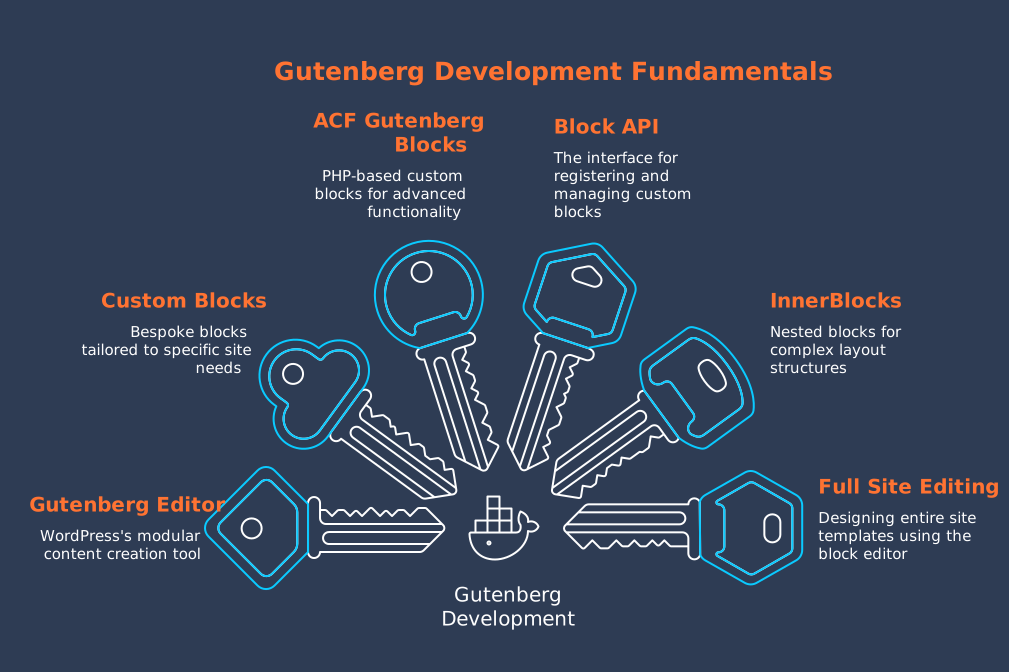
Key Terms
- Gutenberg
- WordPress's block-based editor, introduced in WordPress 5.0. It uses a modular approach where content is built from individual blocks rather than a single text area.
- WordPress Custom Block
- A block created specifically for your site's needs, extending Gutenberg's default block library with bespoke functionality.
- ACF Gutenberg Block
- A custom block built using Advanced Custom Fields Pro, allowing PHP-based development rather than JavaScript/React.
- Block API
- WordPress's programming interface for registering and controlling custom blocks, including functions like
registerBlockType(). - InnerBlocks
- A Gutenberg feature allowing blocks to contain other blocks, enabling complex nested layouts.
- Full Site Editing (FSE)
- WordPress's capability to design entire site templates - headers, footers, archives - using the block editor.
Summary: Hiring a Gutenberg Developer in 2026
- Where to find them: Codeable (vetted specialists), Clutch/DesignRush (verified agencies), WordPress.org job board (community-engaged developers), or established agencies like Flexi IT
- Essential skills: JavaScript/ES6+, React, WordPress Block API for native blocks; PHP and ACF Pro for ACF blocks
- Current rates: €50–€180/hour depending on region and experience; project-based pricing from €2,000–€25,000+
- Verification: Request block-specific portfolio examples, ask technical questions about block deprecation and dynamic rendering, contact references from previous block projects
- Red flags: No JavaScript experience, significantly underpriced quotes, unwillingness to provide references, poor initial communication
- Best practice: Define requirements clearly, establish milestones, tie payments to deliverables
Need custom WordPress Gutenberg blocks built by developers who genuinely understand the Block API? We're happy to talk through your project. Get in touch with Flexi IT for a straightforward conversation about what you're trying to achieve.


