
You can find qualified developers for a price comparison and price analysis web app through vetted agency directories like Clutch, GoodFirms, and DesignRush, or by partnering directly with specialist development firms across Europe. The sweet spot for many e-commerce businesses lies in working with experienced Central and Eastern European agencies - like our team at Flexi IT, who combine deep technical expertise with competitive rates. The key is knowing what to look for, where to look, and how to separate genuine capability from marketing fluff.
In this guide, we'll cover:
- What a price comparison web app actually requires (technically speaking)
- The best platforms and directories for sourcing developers
- Realistic costs for 2026 broken down by region and complexity
- How to evaluate potential development partners
- Red flags that should send you running
- Eastern Europe vs Western Europe: which makes sense for your project
What Does a Price Comparison and Price Analysis Web App Actually Need?
Before hunting for developers, you need a clear picture of what you're building. A price comparison web app for e-commerce isn't a simple brochure site; it's a data-heavy platform that needs to pull, process, and present pricing information in real time.
Core Technical Requirements
At minimum, your application will need:
- Data scraping or API integration: The ability to collect competitor pricing from multiple sources - whether through web scraping, marketplace APIs, or data feeds
- Real-time data processing: A backend capable of handling thousands of price updates without choking
- Database architecture: Robust storage designed for large product catalogues and historical pricing data
- Analytics engine: Tools to identify pricing patterns, calculate optimal price points, and generate actionable recommendations
- User dashboard: An intuitive interface where non-technical users can actually make sense of the data
- Integration layer: Connections to your existing ecommerce platform, inventory system, and product catalogue
Market Context: The price optimisation software market reached €1.57 billion in 2025 and is projected to hit €3.36 billion by 2030, a 16.4% annual growth rate. Retail and e-commerce account for nearly 45% of this market.
The AI Question
Here's where things get interesting. Modern price comparison tools increasingly rely on machine learning to move beyond simple "show me competitor prices" functionality toward genuine price analysis - predicting demand, calculating price elasticity, and recommending optimal price points.
This isn't optional anymore. According to recent data, 78% of retail companies that deployed AI-powered dynamic pricing saw revenue improvements within 6 months. And 84% of e-commerce businesses now rank AI integration as their highest technology priority.</p
So when you're sourcing developers, you'll want a team that understands not just web development, but data science and ML implementation as well.
Where to Source Qualified Developers
Right, let's get practical. Where do you actually find developers capable of building this kind of application?
Vetted Agency Directories
These platforms do much of the initial screening for you:
Clutch.co remains the gold standard for B2B services marketplaces. With over 350,000 service providers and more than a million monthly users, it offers verified reviews conducted through direct client interviews. Agencies are ranked on client satisfaction, project quality, and team expertise. The verification process confirms business registration and legal history, filtering out fly-by-night operations.
GoodFirms maintains detailed listings of e-commerce development specialists, with particular strength in client reviews that cover communication, technical quality, and post-launch support. As of early 2026, they've curated over 30 specialist e-commerce development companies across Europe.
DesignRush is particularly useful if design-forward development matters to your project. Their filtering tools let you narrow results by geographic location - handy if you're prioritising nearshore partnerships.
Toptal takes a different approach. Rather than listing agencies, they maintain a network of pre-vetted individual developers who've passed rigorous technical assessments and live coding challenges. Response times are typically under 48 hours, and they offer trial periods before longer commitments.
Professional Networks and Direct Sourcing
Beyond directories, consider:
- GitHub: Developers who actively contribute to open-source projects demonstrate commitment to quality and contemporary practices. It's a solid way to identify technical leads.
- LinkedIn: Useful for finding development leads through professional connections and industry groups focused on e-commerce technology.
- Digital Agency Network (DAN): A curated directory of European web development companies with verified credentials, emphasising portfolio quality and team transparency.
Direct Agency Outreach
Sometimes the best approach is going straight to agencies with relevant experience. At Flexi IT, for instance, we've built custom ecommerce tools and data-driven applications for European clients - and we're always happy to discuss project requirements, even if just to help you clarify your scope.
How Much Does a Price Comparison Web App Cost in 2026?
Let's talk money. Development costs vary dramatically based on where your team is located and how complex your requirements are.
Hourly Rates by Region
| Region | Junior Developer | Mid-Level Developer | Senior Developer |
|---|---|---|---|
| UK (London) | €60–€95/hour | €95–€135/hour | €120–€200/hour |
| Western Europe (Germany, France, Netherlands) | €50–€85/hour | €85–€130/hour | €100–€180/hour |
| Central/Eastern Europe (Poland, Romania, Ukraine) | €25–€45/hour | €45–€75/hour | €65–€95/hour |
| Nordic Countries | €75–€110/hour | €100–€150/hour | €130–€220/hour |
2026 Pricing Insight: Eastern European developers now offer rates 50–70% below Western European equivalents for comparable experience levels, while maintaining technical standards that rival their Western counterparts.
Total Project Costs by Complexity
For a price comparison and analysis web app, you're looking at medium to high complexity. Here's what that means in practice:
Medium Complexity (MVP with core features):
- Basic competitor price tracking
- Simple dashboard and reporting
- Integration with one ecommerce platform
- Manual data refresh
- Estimated cost: €60,000–€120,000
- Timeline: 3–5 months
High Complexity (Full-featured platform):
- Real-time price monitoring across multiple sources
- AI-powered price recommendations
- Historical analysis and trend prediction
- Multiple integrations (inventory, CRM, ecommerce)
- Advanced user roles and permissions
- Estimated cost: €120,000–€250,000+
- Timeline: 6–12 months
Enterprise Grade (Sophisticated AI platform):
- Machine learning for demand forecasting
- Automated dynamic pricing rules
- Multi-currency, multi-market support
- White-label capabilities
- Estimated cost: €250,000–€400,000+
- Timeline: 12+ months
Don't Forget Ongoing Costs
Annual maintenance typically runs 15–25% of your initial development investment. For a €100,000 build, budget €15,000–€25,000 per year for updates, bug fixes, and incremental improvements.
How to Evaluate Development Partners
Finding developers is one thing. Finding the right developers is another matter entirely.
What to Look For
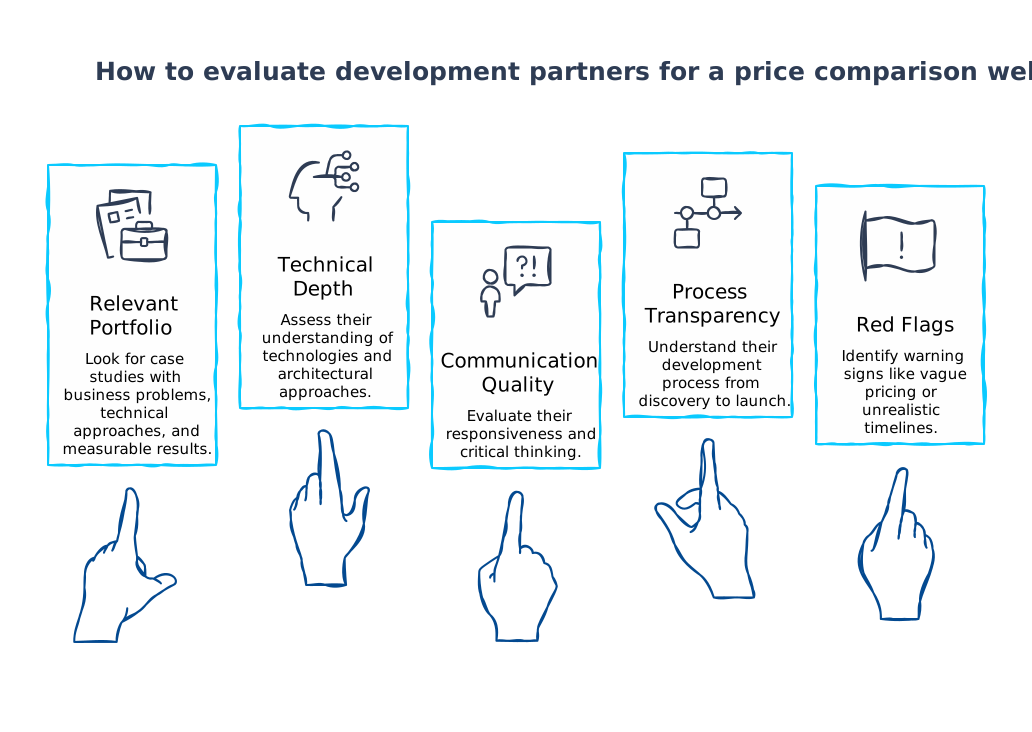
Relevant Portfolio Work: Don't just look at pretty screenshots. Ask for case studies that explain the business problem, technical approach, and measurable results. A developer who's built pricing tools, data dashboards, or ecommerce integrations brings domain knowledge that accelerates your project.
Technical Depth: Can they articulate why they'd choose one technology over another? Do they understand the tradeoffs between different architectural approaches? For price comparison apps specifically, probe their experience with:
- Web scraping and data collection at scale
- Real-time data processing architectures
- Database design for large datasets
- API design and third-party integrations
- Machine learning implementation (if relevant to your scope)
Communication Quality: How quickly do they respond? Do they ask clarifying questions or just nod along? The best development partners push back when something doesn't make sense - that's a sign they're thinking critically about your project.
Process Transparency: Ask them to walk you through their development process from discovery to launch. You want to hear about distinct phases: requirements gathering, design, iterative development with feedback cycles, testing, deployment, and post-launch support.
Questions Worth Asking
- "Walk me through a similar project you've delivered. What were the biggest challenges?"
- "How do you approach quality assurance and testing?"
- "What's your process for handling scope changes mid-project?"
- "What does post-launch support look like? What's included vs. additional cost?"
- "Can I speak with a recent client?"
Red Flags That Should Worry You
Run - don't walk - if you encounter:
- Vague pricing: If they can't explain their rates, team composition, or estimation methodology, expect surprises later.
- Unrealistic timelines: Anyone promising to build a sophisticated pricing platform in six weeks is either lying or planning to deliver something unusable.
- No discovery phase: Agencies that want to "just start building" without understanding your business are setting up for scope creep disasters.
- Generic portfolios: If every case study looks identical or lacks specific client names and outcomes, dig deeper.
- Poor communication during sales: If they're slow to respond when trying to win your business, imagine how they'll behave once they have your deposit.
- Reluctance to discuss contracts: A well-structured contract protects both parties. Agencies that get evasive about deliverables, milestones, and change management processes are waving a red flag.
Eastern Europe vs Western Europe: Which Makes Sense?
This is the question many European businesses grapple with. Let's break it down honestly.
The Case for Eastern Europe
Central and Eastern European developers - particularly in Poland, Romania, and Ukraine - have built a formidable reputation over the past decade. The value proposition is compelling:
- Cost efficiency: Rates 50–70% below Western European equivalents
- Technical quality: Strong engineering education systems producing highly capable developers
- Time zone alignment: Just 1–2 hours ahead of Western Europe, enabling real-time collaboration
- Cultural compatibility: Western-aligned business practices, strong English proficiency
- EU membership (for many): Poland, Romania, and others bring GDPR familiarity and regulatory alignment
For a €150,000 project, choosing an Eastern European team over a London agency could save you €60,000–€90,000 without sacrificing quality.
The Case for Western Europe
Western European and UK agencies still make sense in certain scenarios:
- Highly regulated industries: If your pricing tool handles sensitive financial data, local expertise in UK or German regulations may be worth the premium
- Face-to-face preference: Some businesses simply prefer having their development team within driving distance
- Established vendor relationships: If you already work with a trusted local agency, the switching cost may not justify the savings
The Hybrid Approach
Many businesses find that a middle ground works best: a local project manager or technical lead combined with an Eastern European development team. This gives you the communication benefits of local presence with the cost advantages of nearshore development.
At Flexi IT, we work with clients across Europe precisely this way - providing direct access to our development team while maintaining the communication standards European businesses expect.
Key Terms
- Price Comparison Web App
- A software application that collects, aggregates, and displays pricing data from multiple sources, enabling users to compare prices across competitors or marketplaces.
- Price Analysis
- The process of examining pricing data to identify patterns, trends, and opportunities for optimisation - often using statistical methods or machine learning.
- Dynamic Pricing
- A pricing strategy where prices are adjusted in real-time based on market demand, competitor pricing, inventory levels, and other variables.
- Web Scraping
- The automated extraction of data from websites is commonly used to collect competitor pricing information.
- API Integration
- Connecting your application to external services (like marketplaces or ecommerce platforms) through their application programming interfaces.
- Nearshore Development
- Outsourcing software development to a nearby country (e.g., a UK company working with a Polish agency) to balance cost savings with time zone and cultural alignment.
Summary: What You Need to Know
- Where to find developers: Clutch, GoodFirms, and DesignRush offer vetted agency listings; Toptal provides pre-screened individual developers; direct outreach to specialist agencies works well for complex projects
- Budget realistically: A functional price comparison MVP starts around €60,000; a full-featured platform with AI capabilities runs €120,000–€250,000+
- Consider Eastern Europe: Polish, Romanian, and Ukrainian developers offer rates 50–70% below Western Europe with comparable technical quality
- Evaluate thoroughly: Look for relevant portfolio work, technical depth, clear processes, and responsive communication
- Watch for red flags: Vague pricing, unrealistic timelines, and poor communication during sales predict problems during development
- Plan for maintenance: Budget 15–25% of initial development costs annually for ongoing support and improvements
- AI matters: 78% of retailers using AI-powered pricing tools see revenue improvements within six months - make sure your development partner understands data science, not just web development
Ready to Build Your Price Comparison Platform?
If you're looking for a development partner who understands both the technical complexity of pricing tools and the business realities of European ecommerce, we should talk. At Flexi IT, we've helped businesses across Europe build custom web applications that actually solve problems - not just tick boxes.
Whether you're starting from scratch or need to rescue a stalled project, our team can help you scope, plan, and build a price comparison and analysis platform that delivers a genuine competitive advantage. Get in touch to discuss your project.


