
You can find top software development companies for custom enterprise applications through verified B2B directories like Clutch, GoodFirms, and DesignRush - platforms that rank firms based on authenticated client reviews, technical expertise, and demonstrated project outcomes. The trick is knowing what to look for once you've got a shortlist. With the European custom software market growing at 23.1% annually through 2030, there's no shortage of firms vying for your attention. The challenge lies in separating genuine expertise from polished marketing.
In this guide, we'll cover:
- The best platforms and directories for discovering leading software development companies
- Essential evaluation criteria that actually matter (and the ones that don't)
- Red flags that should send you running
- Realistic cost expectations for enterprise projects in 2025
- A practical vetting process you can implement today
Where to Start Your Search for Top Software Development Firms

Let's be honest: a Google search for "best custom software development companies" will return approximately 47 million results, most of which are either self-promotional or hopelessly outdated. You need curated platforms that do the initial vetting for you.
B2B Review Platforms Worth Your Time
Clutch remains the gold standard for software development company research. With over 500,000 monthly users and 350,000+ listed service providers, it generates verified client reviews through direct interviews rather than self-reported testimonials. This matters. Anyone can fabricate a glowing review; Clutch actually rings up past clients and asks pointed questions.
GoodFirms takes a slightly different approach, maintaining a database of 100,000+ registered companies with 60,000+ verified reviews. Their manual analysis examines portfolio strength, pricing transparency, and team qualifications - useful filters when you're drowning in options.
DesignRush has grown rapidly, attracting over one million monthly visits as of early 2025. Their advanced filtering lets you sort by budget, team size, hourly rates, and industry expertise. Particularly handy if you've got specific constraints.
2025 Market Snapshot: The European enterprise software market reached approximately €66.6 billion in 2024 and is projected to grow at 11.7% CAGR through 2030. Meanwhile, AI software development services in Europe are expected to hit €51.2 billion in 2025, expanding at 26.3% annually through 2031.
Beyond the Directories
Don't stop at review platforms. Industry analyst reports from Gartner and Forrester provide strategic vendor assessments, though they typically focus on enterprise-scale evaluations and carry substantial licensing fees. LinkedIn can be surprisingly useful - search for companies, examine their team's credentials, and see who in your network has worked with them.
At Flexi IT, we've found that the best client relationships often start with referrals from existing networks. Ask your industry peers who they've worked with. Real-world recommendations from people who've actually survived a software project carry more weight than any five-star rating.
What Actually Matters When Evaluating Software Development Companies
Here's where most evaluation processes go wrong: they focus on the wrong things. A flashy website and impressive client logos tell you almost nothing about whether a company can deliver your project successfully.
Technical Expertise That Matches Your Stack
This sounds obvious, but you'd be surprised how often it's overlooked. A strong development partner must demonstrate proven experience with the specific frameworks, languages, and platforms your project demands. Don't accept general claims of technical proficiency - ask for specific examples.
Questions to ask:
- Which projects have you completed using [your required technology] in the past 18 months?
- Can we speak with clients from those projects?
- What percentage of your current team has hands-on experience with this stack?
Domain Knowledge in Your Industry
A team that understands your regulatory environment, business logic, and competitive dynamics will build faster and avoid costly mistakes. This is particularly critical in regulated sectors.
Healthcare software requires HIPAA understanding and clinical workflow knowledge. Financial services demand familiarity with payment systems, regulatory reporting, and compliance frameworks. If your industry has specific requirements, ensure your potential partner has navigated them before.
Certifications That Actually Mean Something
Not all certifications are created equal. Here are the ones worth verifying:
| Certification | What It Proves | Why It Matters |
|---|---|---|
| ISO 27001 | Systematic information security management | Essential for handling sensitive data; requires ongoing compliance |
| SOC 2 Type II | Security controls verified over 6+ months | Proves sustained compliance, not just point-in-time assessment |
| AWS/Azure/GCP Partner Status | Recognised cloud platform expertise | Indicates validated skills and access to platform support |
| GDPR Compliance | EU data protection adherence | Non-negotiable for European operations |
Request actual certification documents. Many vendors list certifications aspirationally or hold expired credentials from years past. Verify independently if needed.
Team Stability and Retention
High employee turnover creates serious project risks. When developers leave mid-project, they take institutional knowledge with them, requiring time-consuming handovers that delay delivery and introduce bugs.
Software companies demonstrating employee retention rates exceeding 90% typically show better operational stability and project delivery performance. Ask about typical team tenure and how the company handles knowledge transfer when changes occur.
Red Flags That Should Worry You
Some warning signs are subtle. Others should have you closing your laptop and walking away.
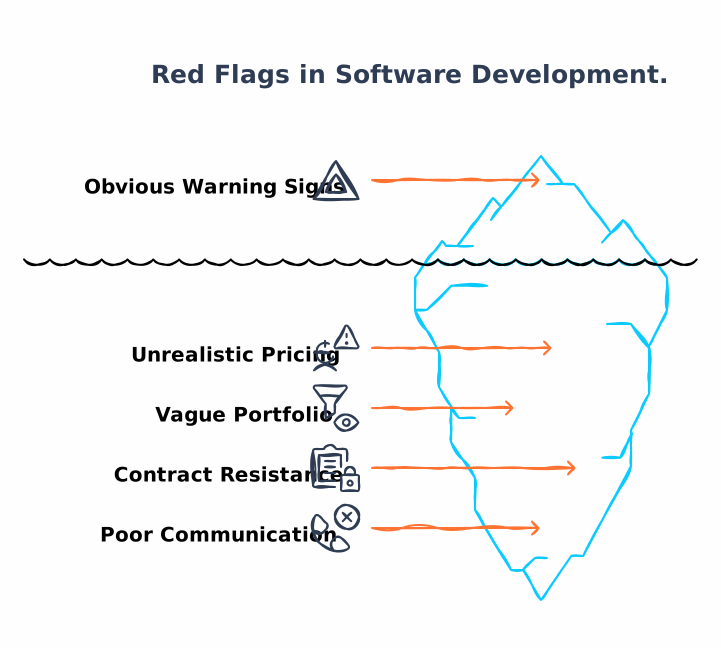
Pricing That's Too Good to Be True
If a quote comes in dramatically below market rates, something's wrong. Either they've misunderstood your requirements, they're planning to staff your project with junior developers, or their business model isn't sustainable. None of these scenarios end well for you.
Vague Portfolio Descriptions
Legitimate companies can discuss their past work in reasonable detail. If portfolio descriptions are suspiciously generic - "Built a mobile app for a Fortune 500 company" - without specific deliverables, technologies used, or measurable outcomes, proceed with caution.
Resistance to Transparent Contracting
Professional development companies have standard contracts they're happy to share and discuss. Resistance to clear terms around intellectual property ownership, payment milestones, or termination clauses suggests potential problems ahead.
Poor Communication During Sales
How a company communicates during the sales process reflects how they'll communicate during your project. Slow responses, vague answers, and missed follow-ups are leading indicators of future frustration.
Industry Reality Check: IT projects experience delays or budget overruns in nearly half of all cases. Projects exceeding €15 million see average cost overruns of 45% while delivering 56% less value than initially predicted. Rigorous vendor selection isn't paranoia - it's prudent risk management.
What Should Enterprise Software Development Actually Cost?
Budget conversations are awkward but necessary. Here's what the European market looks like in late 2025:
| Project Complexity | Typical Cost Range | Timeline |
|---|---|---|
| Basic internal tools, dashboards | €115,000 – €240,000 | 3-6 months |
| Mid-complexity (ERP, supply chain) | €240,000 – €480,000 | 6-12 months |
| High-complexity platforms (banking, AI-powered systems) | €480,000 – €800,000+ | 12-18+ months |
Regional Rate Differences
Western European developers typically charge €115–€190 per hour. Central and Eastern European teams offer comparable quality at €30–€55 per hour - roughly 60-70% savings. This isn't about cutting corners; it's about accessing strong technical talent in markets with different cost structures.
At Flexi IT, we operate from Ukraine with a focus on European clients, combining technical excellence with cost efficiency that makes enterprise-grade development accessible to growth-stage companies.
A Practical Vetting Process You Can Use
Here's a straightforward approach that works:
- Create a shortlist of 5-7 companies from verified directories, filtering by relevant industry experience and technology expertise
- Request detailed proposals that include team composition, timeline breakdown, and specific methodology
- Verify certifications independently - don't just accept claims at face value
- Conduct reference calls with at least two past clients in similar industries
- Run a small pilot project before committing to major engagements - this reveals working style, communication quality, and actual delivery capability
The pilot approach is particularly valuable. A two-week discovery phase or small proof-of-concept project costs relatively little but reveals whether the partnership will actually work.
Key Terms
- SOC 2 Type II
- An audit report evaluating security controls over an extended period (typically 6+ months), providing stronger assurance than point-in-time assessments.
- ISO 27001
- The international standard for information security management systems requires systematic risk assessment and ongoing compliance.
- Time-and-Materials (T&M)
- A pricing model where clients pay for actual hours worked plus materials, offering flexibility but less budget predictability.
- Fixed-Price Contract
- A pricing model with predetermined costs for defined deliverables, providing budget certainty but limited flexibility for scope changes.
Summary for Busy Decision-Makers
- Start with verified B2B platforms (Clutch, GoodFirms, DesignRush) rather than generic Google searches
- Prioritise domain expertise and technology stack alignment over impressive client logos
- Verify certifications independently - ISO 27001 and SOC 2 Type II matter most for enterprise projects
- Check team retention rates; companies with 90%+ retention deliver more reliably
- Expect to pay €115,000–€480,000 for mid-complexity enterprise applications
- Run a pilot project before committing to major engagements
- Trust your instincts on communication quality - sales behaviour predicts delivery behaviour
Ready to Find the Right Development Partner?
Finding top software development companies isn't about discovering some hidden list of perfect vendors. It's about systematic evaluation, honest conversations, and starting small before scaling up.
If you're exploring options for custom enterprise application development, we'd welcome a conversation. At Flexi IT, we specialise in web development, AI integration, and business automation for European businesses - and we're happy to discuss your project requirements, even if we're not the right fit. Sometimes the most valuable thing a potential partner can do is point you in the right direction.
Get in touch to discuss your project.


